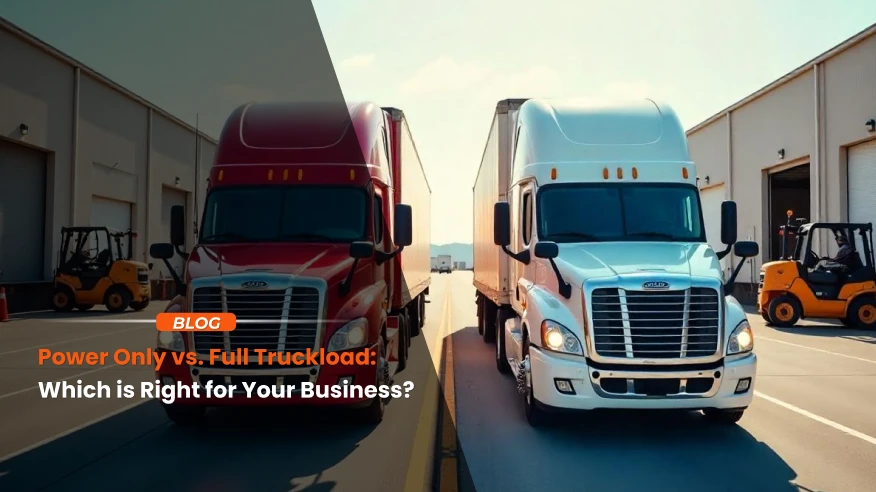
Choosing the right freight transportation method is crucial for businesses looking to optimize logistics, reduce costs, and ensure timely deliveries. Two commonly used options in the trucking industry are Power Only trucking and Full Truckload (FTL) shipping. While both methods serve essential roles, they cater to different business needs. This blog explores the key differences, advantages, and factors to consider when selecting the right option for your supply chain.
Understanding Power Only Trucking
What is Power Only Trucking?
Power Only trucking is a transportation solution where a trucking company provides the truck and driver, while the shipper supplies the trailer. This allows businesses to move loaded trailers without owning a fleet of trucks or hiring full-time drivers.
Who Uses Power Only Trucking?
Power Only trucking is ideal for companies that:
- Have their own fleet of trailers but need additional trucking capacity.
- Manage high volumes of freight that require quick movement.
- Want to reduce fleet maintenance and operational costs.
- Need flexibility to adjust their transportation needs based on demand.
Common Industries Using Power Only Trucking
- Retail and E-commerce: Moving large volumes of goods to distribution centers.
- Manufacturing: Ensuring steady raw material and finished product deliveries.
- Construction: Transporting equipment and materials to job sites.
- Food and Beverage: Moving refrigerated and dry food products efficiently.
Understanding Full Truckload (FTL) Shipping
What is Full Truckload (FTL) Shipping?
FTL shipping is a method where a single shipment fills an entire truck. The freight moves directly from the pickup point to the destination without additional stops or transfers.
Who Uses Full Truckload Shipping?
FTL is best suited for businesses that:
- Regularly transport large shipments that require an entire trailer.
- Need direct shipping with minimal handling to avoid damage.
- Require time-sensitive deliveries with faster transit times.
- Prefer a dedicated truck for security and reliability.
Common Industries Using Full Truckload Shipping
- Automotive: Moving vehicle parts and assembled components.
- Pharmaceuticals: Shipping medical supplies with strict handling requirements.
- Agriculture: Transporting bulk produce and livestock feed.
- Electronics: Delivering high-value goods securely.
Key Differences Between Power Only and Full Truckload
| Aspect |
Power Only Trucking |
Full Truckload (FTL) Shipping |
| Trailer Ownership |
Shipper-owned, carrier provides the truck |
Carrier provides both truck and trailer |
| Cost |
Lower costs for businesses with existing trailers |
Higher costs due to dedicated truck and trailer |
| Flexibility |
More adaptable to fluctuating freight needs |
Best for regular, high-volume shipments |
| Handling and Security |
Shippers control trailer loading |
Minimal handling, reducing damage risks |
| Industry Suitability |
Best for businesses with established trailer fleets |
Ideal for businesses needing dedicated transport |
Pros and Cons of Power Only Trucking
Advantages
- Lower Operational Costs: No need to maintain a fleet of trucks.
- Greater Flexibility: Allows businesses to scale transportation needs quickly.
- Optimized Efficiency: Reduces empty miles by utilizing available trailers.
Challenges
- Trailer Availability: Businesses must ensure they have enough trailers.
- Carrier Dependability: Relies on third-party truck providers for on-time deliveries.
Pros and Cons of Full Truckload Shipping
Advantages
- Dedicated Transport: No shared loads mean direct delivery with minimal delays.
- Faster Transit Times: No additional stops for other shipments.
- Safer Shipments: Less handling reduces the risk of freight damage.
Challenges
- Higher Costs: Paying for the entire truck can be expensive for smaller shipments.
- Less Flexibility: Limited ability to adjust shipping needs based on fluctuating demand.
Choosing the Right Option for Your Business
Deciding between Power Only trucking and FTL shipping depends on several factors.
Use Power Only Trucking if:
- Your business owns trailers but needs trucks and drivers.
- You require cost-effective and scalable transport.
- You want more control over trailer loading and storage.
Use Full Truckload Shipping if:
- You have large, time-sensitive shipments.
- Your freight requires minimal handling for safety reasons.
- You prefer a dedicated truck for reliability and security.
Conclusion
Both Power Only trucking and Full Truckload shipping offer unique benefits, and the right choice depends on your business’s specific logistics needs. If you have existing trailers and need a flexible trucking solution, Power Only trucking might be the ideal choice. However, if you require dedicated, high-volume shipping with minimal handling, FTL could be the better option.
‘0’ Comments
Leave A Comments