

Mar 07, 2025

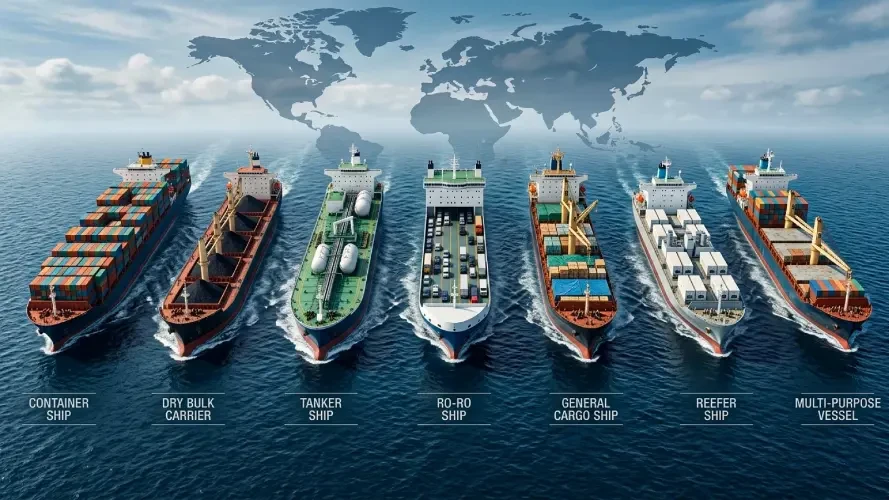
Cargo ships are the backbone of global trade, transporting over 80% of the world's goods by sea. These vessels are specially designed to carry different types of cargo safely and efficiently across international waters. From shipping consumer products and automobiles to transporting crude oil and refrigerated food, every cargo ship is built for a specific purpose.
Understanding the different types of cargo ships helps businesses choose the right shipping solution while improving logistics planning and reducing transportation costs.
Not all cargo is the same. Some products require refrigeration, while others need specialized tanks, open decks, or large storage compartments. Different cargo ships are designed to maximize safety, efficiency, and cargo capacity.
Common cargo categories include:
Consumer goods
Vehicles
Oil and gas
Chemicals
Heavy machinery
Construction materials
Agricultural products
Refrigerated foods
Livestock
Container ships are the most common cargo vessels in international trade. They transport standardized shipping containers (20-foot and 40-foot containers), making loading and unloading faster and more efficient.
Electronics
Clothing
Furniture
Consumer goods
Industrial equipment
Retail products
Fast loading and unloading
High cargo capacity
Secure transportation
Lower shipping costs
Supports global intermodal logistics
Dry bulk carriers transport unpackaged bulk materials that are loaded directly into the ship's cargo holds.
Coal
Iron ore
Grain
Cement
Sand
Fertilizer
Salt
Bauxite
Large carrying capacity
Cost-effective for raw materials
Efficient for mining and agriculture industries
Tanker ships are specially designed with sealed tanks to transport liquid cargo safely.
Crude oil
Refined petroleum
LNG (Liquefied Natural Gas)
LPG (Liquefied Petroleum Gas)
Chemicals
Vegetable oils
Liquid fertilizers
Crude Oil Tankers
Product Tankers
Chemical Tankers
LNG Carriers
LPG Carriers
Ro-Ro ships transport wheeled cargo that can be driven directly on and off the vessel using built-in ramps.
Cars
SUVs
Trucks
Buses
Tractors
Construction equipment
Military vehicles
Faster loading process
Reduced cargo damage
Ideal for automobile manufacturers
General cargo ships transport goods that do not fit into containers or bulk carriers.
Steel products
Timber
Machinery
Pipes
Heavy equipment
Palletized goods
Project cargo
These ships often use onboard cranes for loading and unloading.
Reefer ships maintain controlled temperatures throughout the voyage to preserve perishable cargo.
Fruits
Vegetables
Frozen meat
Seafood
Dairy products
Pharmaceuticals
Flowers
Maintains cold chain logistics
Prevents spoilage
Ensures product quality during long-distance transport
Multi-purpose vessels are designed to carry various cargo types within a single voyage.
Containers
Bulk cargo
Heavy machinery
Project cargo
Steel coils
Wind turbine components
Flexible cargo handling
Suitable for mixed shipments
Cost-effective for diverse logistics needs
|
Ship Type |
Cargo Type |
Main Industries |
|
Container Ship |
Containerized goods |
Retail, Manufacturing, E-commerce |
|
Dry Bulk Carrier |
Raw materials |
Mining, Agriculture, Construction |
|
Tanker Ship |
Liquids & chemicals |
Oil & Gas, Chemical Industry |
|
Ro-Ro Ship |
Vehicles |
Automotive, Heavy Equipment |
|
General Cargo Ship |
Mixed breakbulk cargo |
Industrial, Construction |
|
Reefer Ship |
Temperature-sensitive cargo |
Food, Pharma, Agriculture |
|
Multi-Purpose Vessel |
Mixed cargo |
Project Logistics, Heavy Industry |
Modern cargo ships offer several advantages:
Cost-effective international shipping
High cargo capacity
Reduced carbon emissions per ton of cargo
Supports global trade
Safe transportation for specialized cargo
Reliable long-distance logistics
Efficient supply chain management
Selecting the appropriate vessel depends on several factors:
Type of cargo
Weight and dimensions
Temperature requirements
Shipping distance
Delivery timeline
Budget
Port accessibility
Regulatory compliance
Working with an experienced freight forwarder or logistics provider ensures the right ship is selected for your cargo.
The maritime industry is rapidly evolving with advanced technologies, including:
AI-powered route optimization
Smart cargo tracking
Autonomous ships
Green fuel technologies
Electric and hybrid vessels
Digital logistics platforms
Real-time cargo monitoring
Sustainable shipping practices
These innovations improve operational efficiency while reducing environmental impact.
Container ships are the most widely used cargo vessels because they efficiently transport standardized containers across global trade routes.
Tanker ships are specifically designed to transport crude oil, petroleum products, LNG, LPG, and other liquid cargo safely.
A reefer ship transports temperature-sensitive goods such as fresh produce, seafood, meat, dairy products, pharmaceuticals, and flowers.
Ro-Ro stands for Roll-on/Roll-off, referring to ships that allow vehicles and wheeled equipment to be driven directly on and off the vessel.
Ro-Ro ships are the preferred choice for shipping cars, trucks, buses, and heavy machinery because they offer efficient loading and unloading through built-in ramps.
Cargo ships are the foundation of global commerce, enabling the efficient movement of goods across oceans and connecting businesses to international markets. From container ships and bulk carriers to tanker ships, reefer vessels, and Ro-Ro carriers, each type serves a unique purpose in the global supply chain.
Choosing the right cargo ship depends on your cargo type, shipping requirements, and destination. By understanding the strengths of each vessel, businesses can improve logistics efficiency, reduce costs, and ensure safe, reliable transportation of goods worldwide.
Share:







‘0’ Comments
Leave A Comments