
DELIVERING
Warehousing vs. Logistics: Key Differences Every Business Should Know
- Home
- Blogs
- Warehousing vs. Logistics
- Warehousing vs. Logistics: Key Differences Every Business Should Know
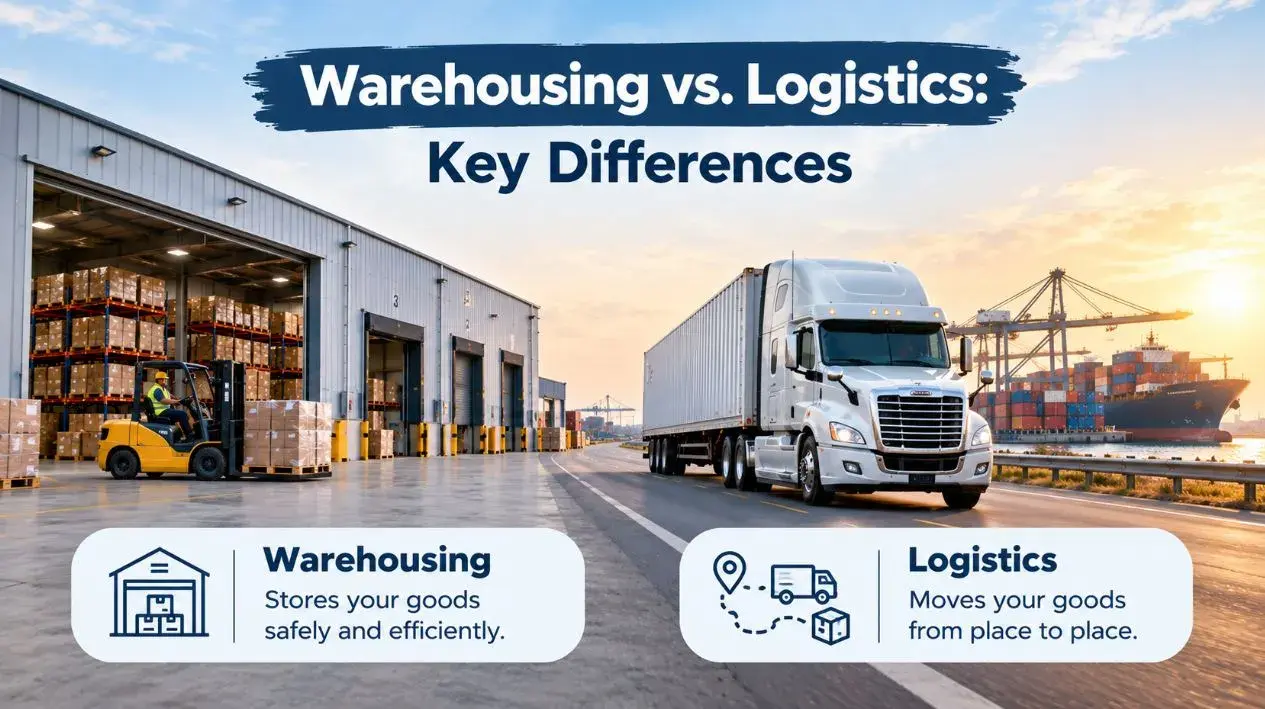

Businesses that store, transport, and deliver products need an efficient supply chain to keep customers satisfied. Two important parts of this process are warehousing and logistics. Although these terms are often used together, they serve different purposes in moving products from suppliers to customers.
Understanding Warehousing vs. Logistics can help businesses manage inventory, control operating costs, reduce delivery delays, and improve their overall supply chain performance.
Warehousing focuses mainly on storing goods and managing inventory, while logistics covers the broader process of planning and coordinating the movement, storage, and delivery of products. Both functions work together to ensure that goods are available when and where they are needed.
In this guide, we will explain the differences between warehousing and logistics, how each works, their benefits, and how businesses can choose the right solutions for their needs.
What Is Warehousing?
Warehousing is the process of storing goods in a designated facility until they are needed for production, distribution, or delivery. A warehouse provides a secure and organized space where businesses can keep raw materials, finished products, spare parts, and other inventory.
Modern warehousing involves more than simply placing products on shelves. It includes inventory tracking, receiving shipments, organizing stock, picking products, packing orders, and preparing goods for dispatch.
For example, an online retailer may receive thousands of products from different suppliers. These products are stored in a warehouse until customers place orders. Warehouse staff then locate the required items, pack them, and prepare them for shipment.
Key Functions of Warehousing
1. Inventory storage
Warehouses provide space to store products safely until they are required. Proper storage arrangements help businesses protect goods from damage, loss, and unsuitable storage conditions.
2. Inventory management
Businesses need accurate information about available stock. Inventory management helps track incoming goods, outgoing orders, product quantities, and stock levels.
3. Order picking and packing
When an order arrives, warehouse employees or automated systems locate the required products and prepare them for shipment. Accurate picking and packing help reduce errors and damaged deliveries.
4. Receiving and dispatching goods
Warehouses receive products from suppliers and prepare orders for transportation. Efficient receiving and dispatch procedures help goods move through the supply chain without unnecessary delays.
5. Stock control
Effective stock control helps businesses identify low inventory levels, avoid overstocking, and plan replenishment according to demand.
What Is Logistics?
Logistics is the process of planning, coordinating, and managing the movement and storage of goods from their origin to their final destination. It can involve transportation, warehousing, inventory coordination, order fulfillment, shipment tracking, and delivery planning.
Unlike warehousing, which concentrates primarily on storage and related activities, logistics connects multiple stages of the supply chain.
For example, a manufacturer may need to move raw materials from a supplier to a production facility, transfer finished goods to a distribution center, and deliver orders to retailers. Logistics helps coordinate these activities efficiently.
Businesses may manage logistics internally or work with a third-party logistics provider, depending on their requirements, shipment volumes, budget, and delivery network.
Key Functions of Logistics
1. Transportation management
Logistics involves selecting suitable transportation methods, coordinating carriers, planning routes, and arranging shipments by road, air, rail, or sea.
2. Shipment planning
Businesses must decide when goods should move, which routes are suitable, and how deliveries can be coordinated with customer requirements.
3. Order fulfillment coordination
Logistics connects order processing, warehouse operations, transportation, and final delivery to help ensure that customers receive the correct products.
4. Shipment tracking
Tracking systems provide updates about shipment progress and help businesses respond to delays or unexpected changes.
5. Supply chain coordination
Logistics connects suppliers, manufacturers, warehouses, distributors, carriers, and customers. Better coordination can improve product availability and reduce unnecessary handling.
6. Delivery management
The final stage may include arranging local transportation, scheduling deliveries, and confirming that goods reach the intended destination.
Warehousing vs. Logistics: What Is the Difference?
The main difference between warehousing and logistics is their scope. Warehousing focuses on storing and handling inventory, while logistics manages the wider movement and coordination of goods throughout the supply chain.
Here are the key differences businesses should understand.
|
Comparison factor |
Warehousing |
Logistics |
|
Main purpose |
Store and manage inventory |
Coordinate the movement and storage of goods |
|
Scope |
Focuses on warehouse operations |
Covers multiple supply chain activities |
|
Main activities |
Receiving, storing, picking, packing, and stock control |
Transportation, routing, shipment planning, tracking, and delivery coordination |
|
Primary location |
Warehouse or storage facility |
Across suppliers, facilities, transport networks, and delivery destinations |
|
Main resources |
Storage space, shelving, warehouse staff, and inventory systems |
Vehicles, carriers, route planning, tracking systems, and logistics networks |
|
Cost considerations |
Rent, labor, storage equipment, utilities, and inventory handling |
Freight charges, fuel, transportation, handling, coordination, and delivery costs |
|
Performance measures |
Inventory accuracy, storage utilization, and order-picking accuracy |
On-time delivery, transit time, transportation cost, and shipment visibility |
|
Main objective |
Keep goods organized, accessible, and available |
Move goods efficiently to the required destination |
Although these functions have different responsibilities, they are closely connected. Efficient warehouse operations can help logistics teams prepare shipments on time, while effective logistics planning ensures goods arrive at warehouses when expected.
How Warehousing and Logistics Work Together
Warehousing and logistics are not competing services. They are complementary parts of a connected supply chain.
Consider a business that imports products from an overseas supplier. Once the shipment arrives, the goods may be transported to a warehouse, where they are inspected, recorded, and stored. When customer orders are received, warehouse staff pick and pack the products. Logistics teams then arrange transportation and coordinate delivery.
The process may include the following steps:
-
Product sourcing: Goods are purchased or manufactured and prepared for shipment.
-
Inbound transportation: Products are moved from suppliers or production facilities.
-
Receiving and storage: The warehouse checks incoming goods and records inventory.
-
Order processing: Products are selected and packed according to customer orders.
-
Outbound transportation: Logistics teams coordinate carrier arrangements and shipment dispatch.
-
Final delivery: Goods are transported to retailers, businesses, or individual customers.
When these stages are well coordinated, businesses can reduce handling errors, improve stock visibility, and deliver products more reliably.
Benefits of Warehousing for Businesses
A well-managed warehouse can support business growth by making inventory easier to control and orders easier to fulfill.
Better Inventory Control
Organized storage and accurate inventory records help businesses understand what is available, where products are located, and when stock needs replenishment.
Faster Order Processing
A clear warehouse layout and efficient picking procedures can reduce the time required to prepare orders for dispatch.
Improved Product Protection
Suitable storage conditions, packaging procedures, and handling practices help protect products from damage. Some goods may require specialized temperature, security, or handling arrangements.
More Efficient Stock Planning
Warehousing allows businesses to maintain inventory closer to expected demand. This can be useful for seasonal products, high-volume items, and businesses with changing order patterns.
Support for Business Expansion
As order volumes grow, businesses may need additional storage capacity or better inventory systems. Suitable warehousing arrangements can help accommodate this growth.
Benefits of Logistics for Businesses
Effective logistics management helps businesses move products between different locations while balancing cost, speed, reliability, and customer expectations.
Better Delivery Planning
Route planning and carrier coordination help businesses select suitable transportation options and organize deliveries around expected schedules.
Improved Supply Chain Visibility
Shipment tracking and clear communication provide better information about where goods are and when they may arrive.
Potential Cost Savings
Comparing transportation options, consolidating compatible shipments, and reducing unnecessary handling can help control logistics expenses.
Greater Customer Satisfaction
Reliable delivery schedules and accurate shipment updates help businesses set realistic expectations and provide a better customer experience.
Access to Wider Markets
Businesses can use appropriate transportation and logistics networks to serve customers across different cities, regions, and countries.
Which Is More Important: Warehousing or Logistics?
Neither warehousing nor logistics is universally more important. The right priority depends on how a business operates and where its main supply chain challenges occur.
A business that holds large quantities of inventory may need to focus on storage capacity, inventory accuracy, and warehouse efficiency. A business that ships products over long distances may place greater emphasis on transportation planning, carrier availability, and delivery performance.
For example:
-
E-commerce businesses need accurate inventory records, fast order picking, and dependable last-mile delivery.
-
Manufacturers may require organized raw material storage, production supply coordination, and finished-goods transportation.
-
Wholesale distributors often need sufficient storage capacity and reliable delivery schedules for large orders.
-
Importers and exporters may need coordinated warehousing, ocean freight, customs documentation, and inland transportation.
Many businesses benefit from improving both functions rather than treating them separately.
How to Choose the Right Warehousing and Logistics Solutions
Before selecting a provider or developing an internal operation, businesses should evaluate their practical requirements.
1. Understand Your Storage Requirements
Determine how much inventory you need to store, how quickly products move, and whether special storage conditions are necessary. Consider seasonal demand and future growth as well.
2. Evaluate Transportation Needs
Review your shipping destinations, delivery timelines, shipment sizes, and preferred transportation methods. These factors help determine which logistics arrangements are suitable.
3. Compare Total Costs
Look beyond the advertised storage rate or freight charge. Consider handling fees, packaging, fuel surcharges, documentation, insurance where applicable, storage duration, and other relevant costs.
4. Review Technology and Tracking
Inventory management software, warehouse management systems, and shipment tracking tools can improve visibility. Ask providers how they report inventory levels and communicate shipment updates.
5. Check Experience and Service Capabilities
Choose a provider whose facilities, transportation network, and operational experience match your cargo type and business needs. Confirm any special requirements before signing an agreement.
6. Measure Performance
Use practical performance indicators such as inventory accuracy, order-processing time, on-time delivery, shipment damage rates, and total logistics cost. Reviewing these measures regularly can help identify areas for improvement.
Common Mistakes Businesses Should Avoid
Poor coordination between warehousing and logistics can lead to avoidable costs and delays. Businesses should watch out for these common mistakes:
-
Inaccurate inventory records: Incorrect stock information can lead to order cancellations and fulfillment delays.
-
Poor warehouse organization: Difficult-to-locate products can increase picking time and labor costs.
-
Ignoring additional charges: Comparing only the basic quoted rate may hide important costs.
-
Insufficient delivery planning: Last-minute transportation arrangements can reduce flexibility and increase expenses.
-
Weak communication: Delayed updates between warehouse teams, carriers, and customers can create confusion.
-
Choosing services without reviewing demand: Storage space or transportation capacity that does not match actual needs may result in wasted resources.
Regular reviews, clear responsibilities, and reliable information systems can help businesses avoid these problems.
How Empath Logistics Can Support Your Supply Chain
Choosing suitable logistics services requires an understanding of shipment requirements, transportation options, delivery schedules, and the coordination needed to move goods efficiently.
Empath Logistics helps businesses explore logistics solutions that align with their shipping and supply chain needs. When evaluating a logistics provider, businesses should discuss their cargo details, origin and destination, shipment volume, preferred timelines, and any special handling requirements.
It is also important to clarify which services are included in a quotation, such as transportation coordination, warehousing, documentation assistance, or other applicable services. The available options may vary according to the route, cargo, and agreed service scope.
By reviewing these requirements carefully, businesses can make more informed decisions about how warehousing and logistics should work together to support their operations.
Conclusion
Understanding Warehousing vs. Logistics helps businesses identify what each function contributes to the supply chain. Warehousing focuses on storing, organizing, and managing inventory, while logistics coordinates the movement and delivery of goods across different locations.
Both functions are essential for maintaining product availability, controlling operating costs, and meeting customer expectations. The most effective approach is to align warehouse operations with transportation planning, inventory management, and delivery requirements.
Whether you run a small business, manage a distribution network, or ship products internationally, evaluating your storage and transportation needs can help you build a more reliable supply chain. With the right planning and suitable service providers, your business can improve efficiency and prepare for future growth.
Frequently Asked Questions About Warehousing vs. Logistics
1. What is the main difference between warehousing and logistics?
Warehousing focuses on storing, organizing, and managing inventory. Logistics covers the broader coordination of transportation, storage, shipment planning, tracking, and delivery of goods.
2. Is warehousing considered part of logistics?
Yes. Warehousing is commonly considered one component of logistics because goods may need to be stored before, during, or after transportation. Logistics includes additional activities such as carrier coordination and delivery planning.
3. What are examples of warehousing services?
Warehousing services may include inventory storage, receiving, stock tracking, order picking, packing, labeling, dispatch preparation, and specialized storage where available.
4. What are examples of logistics services?
Logistics services may include freight transportation, route planning, shipment coordination, tracking, distribution, delivery scheduling, and customs-related support where offered.
5. Which is better for a small business: warehousing or logistics?
It depends on the business's needs. A company with inventory storage challenges may prioritize warehousing, while a company struggling with transportation or delivery may prioritize logistics. Many businesses need both.
6. How do warehousing and logistics affect supply chain costs?
Warehousing costs can include storage space, labor, inventory handling, and equipment. Logistics costs may include transportation, fuel, carrier charges, and delivery coordination. Improving both functions can help reduce avoidable expenses.
7. What is the difference between warehousing and distribution?
Warehousing primarily involves storing and managing inventory. Distribution focuses on moving products through the network to retailers, businesses, or end customers. Distribution often relies on both warehousing and logistics.
8. What is third-party logistics (3PL)?
Third-party logistics, or 3PL, refers to outsourcing selected logistics activities to an external provider. Depending on the agreement, services may include transportation, warehousing, order fulfillment, and distribution.
9. How can technology improve warehousing and logistics?
Warehouse management systems can improve inventory accuracy and order processing, while transportation management and tracking systems can support route planning, shipment visibility, and delivery coordination.
10. How do I choose a warehousing and logistics provider?
Compare service capabilities, facility and route coverage, pricing, technology, cargo-handling experience, communication, and performance standards. Confirm the full scope of services and all relevant charges before making a decision.
Share:




‘0’ Comments
Leave A Comments