
DELIVERING
What is Full Container Load (FCL) Shipping?
- Home
- Blogs
- Full Container Load
- What is Full Container Load (FCL) Shipping?
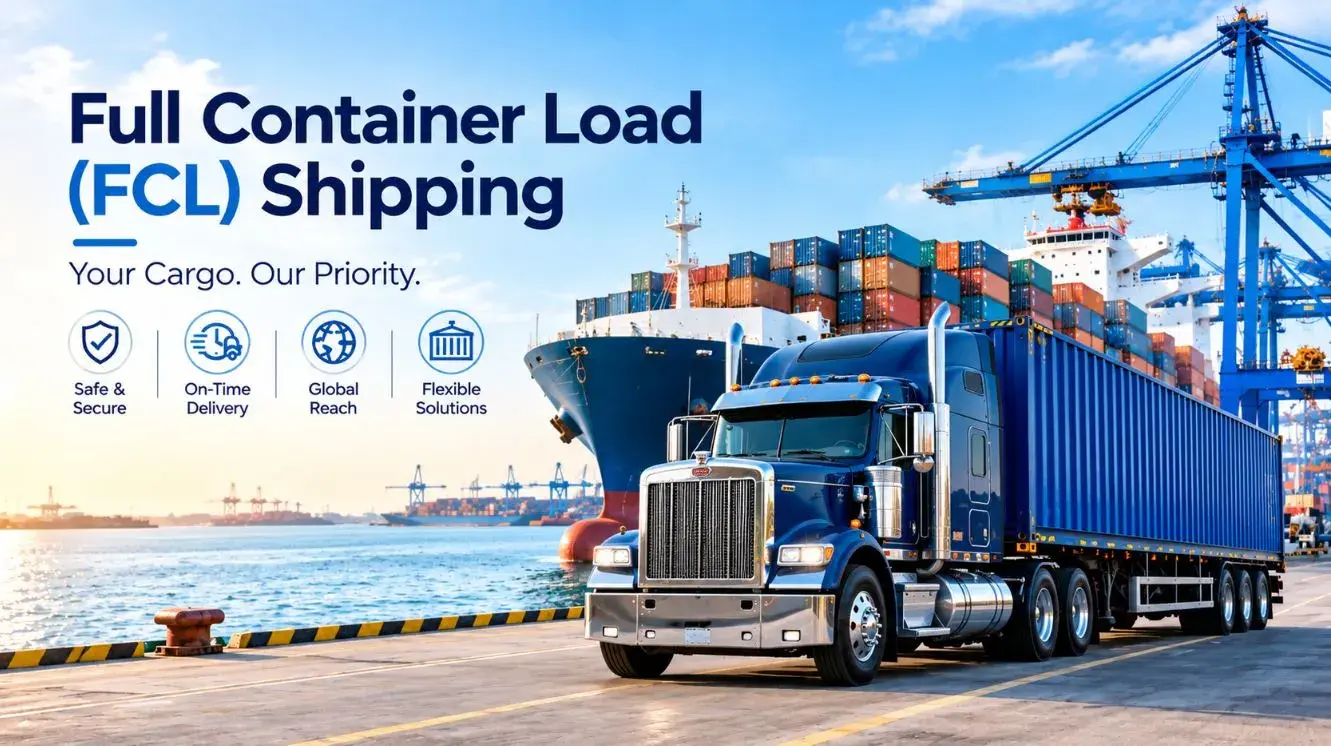

When businesses ship goods internationally, choosing the right transportation method can make a significant difference in cost, delivery planning, and cargo handling. For companies moving large quantities of products, Full Container Load (FCL) shipping is a common option. It allows a business to reserve an entire shipping container for its cargo instead of sharing space with shipments from other companies.
FCL shipping is widely used in international trade because it provides a practical way to transport bulk goods, commercial products, raw materials, and other large shipments by sea. However, it is not always the best option for every business. Understanding how FCL works and how it compares with Less than Container Load (LCL) shipping can help you make a more informed decision.
In this guide, we will explain the meaning of FCL shipping, how the process works, its main benefits, the factors that affect its cost, and how to choose between FCL and LCL shipping for your business.
What Is Full Container Load (FCL) Shipping?
Full Container Load, commonly known as FCL, is an ocean freight shipping method in which an entire container is reserved for one shipper's consignment. The container carries that shipment rather than combining it with cargo from multiple unrelated shippers.
Despite the name, an FCL container does not have to be completely full. A business can book an entire container even when some space remains unused. The main difference is that the container is dedicated to the shipment under the FCL booking arrangement.
For example, a furniture manufacturer exporting tables, chairs, and cabinets to an overseas buyer may choose FCL shipping to keep the order together in one container. The goods can be loaded at the supplier's warehouse, secured inside the container, and transported to the destination according to the shipping plan.
FCL is particularly useful for businesses that regularly ship large quantities of products or need greater control over how their cargo is packed and transported.
How Does FCL Shipping Work?
FCL shipping involves several stages, from booking the container to delivering the cargo at its destination. Understanding these steps helps businesses prepare their shipments and avoid unnecessary complications.
1. Shipment Planning and Container Booking
The process begins with identifying the cargo type, quantity, dimensions, weight, destination, and expected delivery schedule. Based on these details, the shipper or freight forwarder determines the appropriate container and shipping arrangement.
Standard 20-foot and 40-foot containers are commonly used for general cargo. Other options, including high-cube or specialized containers, may be suitable depending on the shipment's dimensions and handling requirements.
2. Container Loading and Cargo Preparation
After the booking is confirmed, the empty container is made available for loading at an agreed location, such as a supplier's warehouse or loading facility.
The cargo must be packed appropriately and secured to reduce movement during transportation. Weight distribution is important, and the container must comply with applicable weight limits and cargo-handling requirements.
Proper loading helps protect the goods during the journey and makes unloading easier at the destination.
3. Transportation to the Port
Once loading is complete, the container is secured and transported to the departure port. The required shipping documents and export procedures are handled according to the shipment's route and applicable regulations.
The container is then prepared for loading onto the vessel according to the shipping schedule.
4. Ocean Transportation
The shipping container travels by sea to the destination port. Transit time depends on the route, vessel schedule, port conditions, and any transshipment requirements.
During this stage, the shipper or logistics provider may coordinate shipment updates and communicate any schedule changes that could affect delivery planning.
5. Customs Clearance and Final Delivery
When the container reaches the destination, the applicable import procedures and customs requirements must be completed. After the necessary release, the container can be transported to the consignee's warehouse or another agreed delivery location.
Depending on the shipping arrangement, the container may be unloaded at the destination facility or handled through another suitable delivery process.
What Are the Main Benefits of FCL Shipping?
FCL shipping offers several advantages for businesses that need to transport larger quantities of cargo internationally.
Dedicated Container Space
One of the main advantages of FCL is that the container is reserved for one shipper's cargo. Businesses do not need to share the container with unrelated shipments, which can simplify cargo organization and handling.
This arrangement may be particularly useful for larger commercial orders, consolidated inventory, or shipments that need to remain together.
Fewer Cargo Handling Steps
FCL shipments generally avoid the consolidation and deconsolidation stages associated with LCL shipping. This can reduce the number of times the cargo needs to be handled during the transportation process.
Fewer handling stages may help reduce certain risks, although proper packaging, secure loading, and careful handling remain essential.
Potential Cost Savings for Larger Shipments
FCL shipping is often cost-effective when the cargo volume is large enough to justify booking an entire container. Instead of paying for individual cargo space, the business pays for the container and the associated transportation services.
However, the most economical choice depends on the total shipment cost, not just the basic freight rate. Businesses should compare FCL and LCL quotes before making a decision.
Better Control Over Cargo Loading
With FCL, businesses can arrange how their goods are packed and secured inside the container, subject to safety requirements and the agreed shipping arrangement.
This can be helpful for shipments containing multiple product types, fragile items, or goods that need careful organization.
Suitable for Regular International Shipping
Businesses that frequently import or export goods may benefit from using FCL for their larger shipments. It can support repeat shipping arrangements, inventory planning, and coordination between suppliers, warehouses, and overseas customers.
What Is the Difference Between FCL and LCL Shipping?
FCL and LCL shipping are two common options for transporting goods by sea. The main difference is whether a business reserves an entire container or shares container space with other shipments.
LCL stands for Less than Container Load. Under this arrangement, a freight forwarder or consolidator combines cargo from multiple shippers into one container. Each business pays for its portion of the shipment rather than reserving the entire container.
Here is a simple comparison of FCL and LCL shipping.
|
Factor |
FCL Shipping |
LCL Shipping |
|
Container space |
Entire container reserved for one shipper's cargo |
Space shared with other shipments |
|
Pricing |
Generally quoted per container |
Commonly based on cargo volume or chargeable measurement, plus applicable fees |
|
Suitable for |
Larger shipments |
Smaller shipments |
|
Cargo handling |
Usually fewer consolidation-related handling stages |
Requires consolidation and separation of shipments |
|
Delivery planning |
Avoids delays associated with waiting for other cargo to be consolidated |
Schedules may depend on consolidation and deconsolidation |
|
Cargo control |
Greater control over loading and packing arrangements |
Cargo is handled as part of a shared-container process |
|
Cost efficiency |
Often attractive for larger volumes |
Often attractive for smaller volumes |
Neither option is automatically better for every shipment. LCL can help businesses avoid paying for unused container capacity, while FCL may offer better overall value when shipment volume increases.
The best option depends on cargo volume, destination, handling requirements, total charges, and delivery expectations.
When Should a Business Choose FCL Shipping?
FCL shipping may be the right choice when a business has enough cargo to justify reserving an entire container or has particular requirements for handling and shipment organization.
Consider FCL if:
-
You regularly ship large quantities of goods.
-
Your cargo occupies a substantial portion of a standard container.
-
You want to avoid sharing container space with other shipments.
-
Your goods need to remain grouped together during transportation.
-
You want to reduce handling stages associated with cargo consolidation.
-
You need a shipping arrangement that supports regular international orders.
For example, an exporter shipping a large order of machinery parts to an overseas distributor may find FCL suitable because the shipment requires substantial container space.
On the other hand, a small business sending only a few cartons or pallets may find LCL more economical.
There is no universal cargo-volume threshold at which FCL becomes cheaper than LCL. The break-even point changes according to the route, freight rates, cargo dimensions, and local handling charges. Comparing complete quotes for both options is the most reliable approach.
What Factors Affect the Cost of FCL Shipping?
FCL shipping costs vary depending on the shipment and the transportation route. Businesses should understand the main pricing factors before requesting a quote.
Container size and type: A 20-foot container may suit certain dense or moderate-volume shipments, while a 40-foot or high-cube container may be more appropriate for larger or bulkier goods.
Origin and destination: Port locations, shipping routes, vessel availability, and inland transportation requirements affect the overall cost.
Cargo weight and dimensions: The shipment must comply with container capacity and weight restrictions. Heavy or oversized cargo may require special arrangements.
Freight rates and surcharges: Ocean freight rates can change with market conditions, fuel-related charges, demand, and carrier pricing.
Port and terminal charges: Handling, terminal, documentation, and other applicable charges may form part of the total shipment cost.
Customs and inland delivery: Customs-related expenses, duties and taxes where applicable, transportation to the final destination, and unloading arrangements can increase the overall cost.
When comparing quotations, ask whether the prices include origin handling, ocean freight, destination charges, customs-related services, and final delivery. A clear breakdown makes it easier to compare different shipping options fairly.
How to Prepare Your Cargo for FCL Shipping
Proper preparation helps businesses protect their goods and avoid preventable shipping problems.
Start by selecting packaging suitable for the product and the expected transportation conditions. Use appropriate pallets, cartons, protective materials, and securing methods where necessary.
Next, prepare an accurate packing list with the number of packages, cargo descriptions, weights, and dimensions. Make sure the commercial invoice and other required shipping documents contain consistent information.
Before loading, check that the container is suitable for the cargo and that its interior is clean, dry, and in an appropriate condition. Distribute the weight correctly and secure the goods to limit movement during transit.
Finally, confirm the shipping schedule, documentation requirements, customs procedures, and delivery arrangements with your logistics provider. Good preparation helps reduce delays and makes the shipment easier to manage from origin to destination.
How Can Empath Logistics Help With Ocean Freight Shipping?
Choosing an appropriate shipping method is an important part of managing an international supply chain. Businesses need to consider cargo volume, transportation costs, delivery schedules, documentation, and the requirements of their overseas customers.
Empath Logistics provides logistics solutions for businesses managing freight transportation requirements. When planning an ocean freight shipment, businesses should discuss their cargo details, origin and destination, preferred schedule, and any special handling needs with their logistics provider.
For shipments requiring an entire container, FCL may offer a suitable combination of dedicated container space and simplified cargo handling. For smaller consignments, LCL may be worth considering to avoid booking more capacity than necessary.
Empath Logistics can help businesses explore suitable freight arrangements based on their shipment requirements. To learn more about available transportation options, visit the Empath Logistics website and discuss your shipping needs with the team.
Conclusion
Full Container Load shipping is a practical ocean freight option for businesses that need dedicated container space for their international shipments. It can simplify cargo handling, provide greater control over loading arrangements, and offer cost advantages when shipment volumes justify the use of an entire container.
However, FCL is not the right solution for every business. Smaller consignments may be better suited to LCL shipping, particularly when paying for a full container would create unnecessary expense.
By comparing FCL and LCL shipping options, reviewing total transportation costs, and preparing cargo carefully, businesses can make informed decisions that support their logistics and supply chain goals. Working with a knowledgeable logistics provider can also help simplify shipment planning and coordination.
Frequently Asked Questions About FCL Shipping
1. What does FCL stand for in shipping?
FCL stands for Full Container Load. It is an ocean freight arrangement in which an entire shipping container is reserved for one shipper's consignment rather than shared with unrelated shipments.
2. Does an FCL container have to be completely full?
No. An FCL container does not have to be filled to capacity. A business can reserve the entire container for its cargo even when some space remains unused.
3. What is the difference between FCL and LCL shipping?
FCL shipping reserves an entire container for one shipper's cargo, while LCL shipping combines cargo from multiple shippers in a shared container. FCL is often suitable for larger shipments, whereas LCL can be more economical for smaller consignments.
4. Is FCL shipping cheaper than LCL shipping?
FCL can offer better value for larger shipments, but it is not always cheaper. The final cost depends on the cargo volume, route, container rate, handling fees, and other applicable charges. Comparing complete quotations helps determine the most economical option.
5. How long does FCL shipping take?
Transit time depends on the origin and destination ports, vessel schedule, shipping route, port congestion, and any transshipment requirements. Customs clearance and inland delivery can add time beyond the ocean journey.
6. What container sizes are commonly used for FCL shipping?
Common options include 20-foot and 40-foot standard containers, as well as 40-foot high-cube containers. The most suitable size depends on cargo dimensions, weight, volume, and loading requirements.
7. What goods can be shipped through FCL?
FCL can be used for many types of commercial cargo, including furniture, machinery, electronics, packaged products, textiles, and industrial materials. Certain goods require specialized containers, permits, packaging, or handling arrangements.
8. What documents are required for FCL shipping?
Common documents include a commercial invoice, packing list, and bill of lading, along with applicable export and import declarations. Additional documents or certificates may be required depending on the cargo and the countries involved.
9. How can I decide between FCL and LCL shipping?
Compare the shipment's volume, total transportation cost, delivery schedule, cargo-handling requirements, and destination charges. FCL may suit larger shipments, while LCL may be more practical for smaller consignments that do not justify an entire container.
10. How can I get an FCL shipping quote?
To request a quote, provide the cargo description, total weight and dimensions, origin and destination, preferred shipping date, and any special handling requirements. Ask for a breakdown of freight, port charges, documentation, and final delivery costs.
Share:





‘0’ Comments
Leave A Comments