

Oct 31, 2026

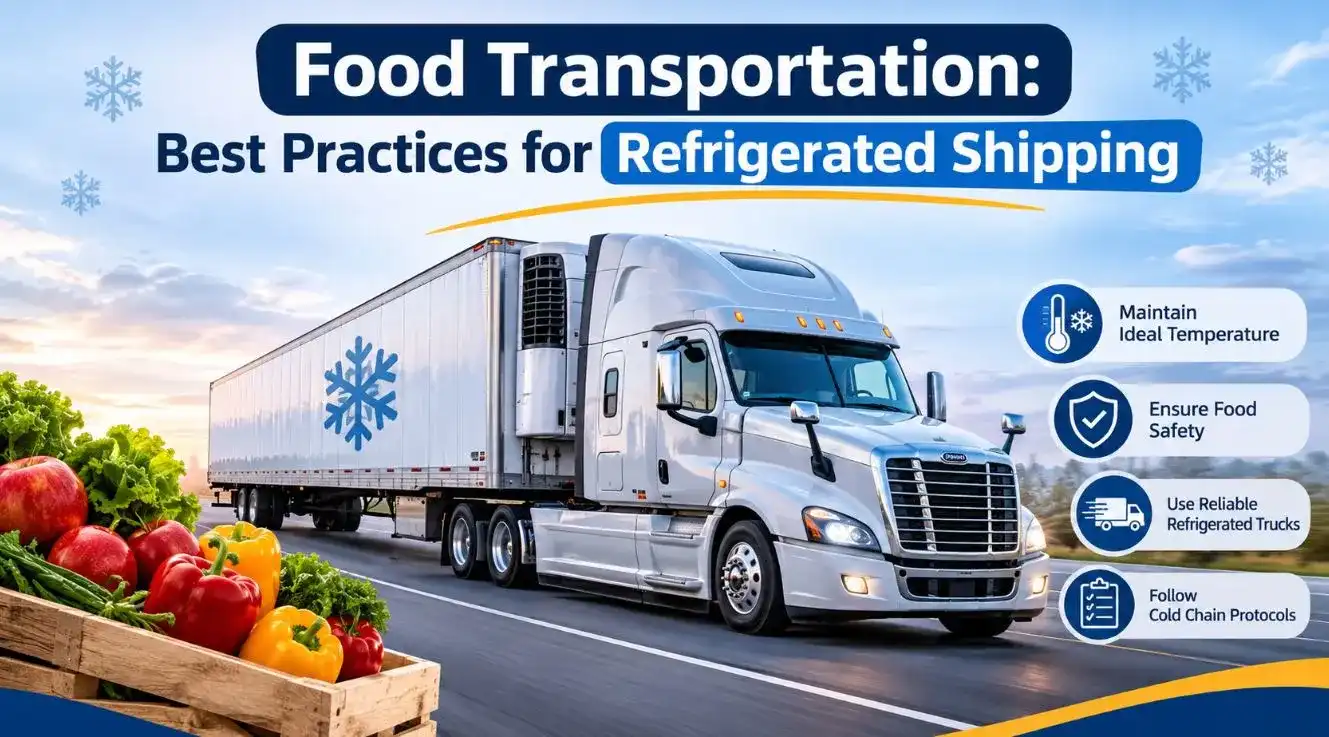
Food transportation requires careful planning, especially when shipments contain products that can spoil, lose quality, or become unsafe if handled incorrectly. Fresh produce, dairy products, meat, seafood, frozen foods, and other perishable goods often need controlled temperature conditions throughout transit.
This is where refrigerated food transportation becomes essential. It helps businesses move temperature-sensitive products while managing the conditions that affect food quality and shelf life. However, using a refrigerated truck or container alone does not guarantee a successful shipment. Proper preparation, suitable equipment, careful loading, temperature monitoring, and coordination between everyone involved are equally important.
For food manufacturers, distributors, retailers, and suppliers, understanding refrigerated shipping best practices can help reduce avoidable delays, product damage, and transportation losses.
Refrigerated food transportation is the movement of perishable food products using vehicles or shipping equipment designed to maintain controlled temperature conditions. These shipments may travel by refrigerated truck, container, or other temperature-controlled transportation methods.
Unlike standard freight, refrigerated shipments require additional attention to product-specific handling and temperature requirements. Different food products have different storage needs. For example, fresh vegetables, frozen meat, dairy products, and seafood should not automatically be transported under the same conditions.
The objective is to maintain the appropriate environment for the cargo from the point of collection to the final delivery location.
Refrigerated transportation is commonly used by:
Food manufacturers and processors
Grocery stores and supermarket chains
Restaurants and food distributors
Seafood and meat suppliers
Dairy producers
Agricultural businesses
Frozen food companies
Food importers and exporters
Food quality can change during transportation when products are exposed to unsuitable temperatures, poor handling, or extended delays. These conditions may affect freshness, texture, appearance, and shelf life.
A well-planned refrigerated shipping process helps businesses manage these risks.
Fresh and frozen products can be sensitive to temperature changes. Maintaining the required transportation conditions helps protect product quality during the journey.
For example, fresh produce may lose quality when exposed to unsuitable storage conditions, while frozen products may partially thaw if the required frozen environment is not maintained.
Temperature management is an important part of protecting perishable cargo. Refrigerated equipment helps maintain the conditions required for different food categories, reducing the risk of temperature-related deterioration.
However, refrigeration cannot reverse spoilage that occurred before loading. Proper storage and preparation before transportation are also necessary.
Food businesses must consider applicable food safety requirements throughout the supply chain. Proper transportation practices help maintain suitable handling conditions and reduce opportunities for contamination or improper temperature exposure.
Damaged or spoiled food can lead to rejected deliveries, financial losses, customer complaints, and additional operational costs. Careful refrigerated shipping helps businesses protect the value of their products.
Successful temperature-controlled food shipping involves more than selecting a refrigerated vehicle. Businesses should follow a consistent process before, during, and after transportation.
The first step is identifying the correct temperature requirements for the cargo.
Different food products have different storage and transportation needs. Fresh vegetables, dairy products, seafood, frozen meals, and meat products may require different conditions.
Before arranging transportation, businesses should confirm:
Required temperature range
Whether the product needs chilled or frozen conditions
Manufacturer or supplier handling instructions
Applicable food safety requirements
Any special handling restrictions
Avoid using one temperature setting for every food shipment. The correct conditions should be based on the specific product and relevant handling guidance.
Choosing suitable equipment is essential for protecting temperature-sensitive food during transit.
Common options include:
Refrigerated Trucks: These vehicles use temperature-control units to transport perishable goods over road routes. They are commonly used for regional and domestic food distribution.
Refrigerated Trailers: Reefer trailers are used for larger shipments and longer road transportation routes. They can support full truckload shipments and other suitable freight arrangements.
Refrigerated Containers: Also known as reefer containers, these units are used in ocean freight and intermodal transportation. They help maintain controlled conditions during international and multimodal shipping.
The right option depends on shipment size, route, transportation mode, product requirements, and delivery schedule.
Food products should generally be brought to their required storage temperature before loading, where the product and handling instructions call for it.
A refrigerated trailer or container is designed to maintain cargo conditions during transportation. It should not automatically be treated as equipment for cooling warm products after loading.
Loading products at an unsuitable temperature can make it harder to maintain the required conditions throughout the journey.
Businesses should coordinate with suppliers, warehouse teams, and carriers to confirm that products are ready for transportation before dispatch.
Before loading, the transportation equipment should be checked to confirm that it is suitable for the shipment.
A basic pre-loading inspection may include:
Checking the refrigeration unit
Confirming that the equipment is clean
Inspecting doors, seals, and interior surfaces
Checking for visible damage or unusual odors
Confirming the temperature-control settings
Reviewing equipment suitability for the cargo
The inspection should also consider whether the equipment is appropriate for the food products being transported.
Cleanliness is particularly important because residues, odors, and contamination risks can affect food cargo.
Loading practices can influence temperature distribution and cargo condition during transit.
Products should be arranged to support appropriate airflow and prevent unnecessary movement. Blocking air circulation can create areas where temperature conditions differ from the intended setting.
Good loading practices include:
Following the equipment manufacturer's loading guidance
Keeping air circulation pathways clear
Avoiding overloading
Securing cargo to prevent movement
Separating incompatible products when necessary
Using suitable packaging and pallets
Minimizing the time that refrigerated doors remain open
Careful loading also helps reduce physical damage to cartons, containers, and food products.
Packaging plays an important role in refrigerated food shipping. It helps protect products from physical damage, contamination, moisture, and handling issues.
The appropriate packaging depends on the food category and transportation requirements.
For example, fresh produce may require packaging that supports ventilation, while frozen food may need packaging designed to protect the product during handling and storage.
Businesses should consider:
Product type and sensitivity
Packaging strength
Moisture resistance
Ventilation requirements
Stacking limitations
Food-grade packaging suitability
Protection during loading and unloading
Packaging should work alongside temperature-controlled equipment rather than replace it.
Temperature monitoring helps businesses understand whether a shipment is being transported under the intended conditions.
Depending on the shipment, monitoring may involve equipment displays, temperature-recording devices, data loggers, or other monitoring systems.
Businesses should establish a monitoring process that identifies:
The required temperature range
How frequently readings are checked
Who reviews temperature information
How unusual readings are reported
What action should be taken if a problem occurs
It is also important to understand that air temperature readings do not always represent the actual temperature of the food product. Product temperature may need to be assessed separately using appropriate procedures.
Transportation delays can create additional challenges for perishable food shipments. Longer transit times, unexpected stops, traffic, and delivery coordination issues may affect the overall shipping process.
Route planning should consider:
Total transportation distance
Expected transit time
Road and traffic conditions
Pickup and delivery schedules
Rest and operational stops
Warehouse receiving hours
Border or port procedures, where applicable
For international food shipments, businesses should also coordinate transportation schedules with customs procedures, port operations, and destination handling arrangements.
A realistic delivery plan helps reduce unnecessary waiting and improves coordination across the supply chain.
Food transportation equipment should be suitable for the products being carried and maintained in a clean condition.
Cross-contamination risks may arise when equipment is not properly cleaned between shipments or when incompatible products are transported together without appropriate separation.
Businesses should establish procedures for:
Cleaning and inspecting equipment
Checking previous cargo information when relevant
Separating incompatible food products
Protecting food from chemicals and non-food cargo
Maintaining suitable packaging and handling practices
These measures support a safer and more controlled transportation process.
Even carefully planned shipments can encounter unexpected problems. Refrigeration equipment may malfunction, transportation delays may occur, or temperature readings may move outside the required range.
Businesses should have a clear response plan before the shipment begins.
A practical response process may include:
Identify and record the temperature issue.
Notify the responsible transportation and shipping contacts.
Check the refrigeration equipment and shipment conditions.
Follow the agreed corrective-action procedure.
Assess the affected food according to applicable product guidance and food safety procedures.
Document the incident and actions taken.
Do not assume that a shipment is safe or unsafe based on one temperature reading alone. The assessment should consider the product, exposure duration, actual product condition, and relevant food safety requirements.
Even when businesses use appropriate refrigerated equipment, several operational challenges can affect shipments.
Frequent door openings, unsuitable loading practices, equipment problems, or incorrect settings can contribute to temperature variations.
Traffic, weather, port congestion, and warehouse scheduling issues may extend transit time. These delays can make shipment coordination more difficult.
Incorrect cargo placement or overloading can restrict airflow and create uneven temperature conditions inside the equipment.
Refrigeration units need proper inspection and maintenance. Equipment problems during transit can disrupt the intended temperature conditions.
Poor communication between suppliers, warehouses, carriers, and receivers can result in missed appointments, extended waiting times, or loading problems.
Identifying these risks early helps businesses plan more reliable refrigerated transportation.
Selecting a suitable transportation provider is an important part of managing perishable shipments. Businesses should look beyond the quoted transportation rate and consider whether the provider can support the shipment's specific requirements.
Before selecting a provider, consider the following:
Experience With Your Cargo Type: Ask whether the provider has handled similar food products and understands their transportation requirements.
Suitable Equipment: Confirm whether the available trucks, trailers, or containers are appropriate for your shipment.
Temperature Monitoring: Understand what monitoring or reporting options are available and how temperature-related issues are communicated.
Route and Transit Planning: Review the proposed route, estimated transit time, pickup schedule, and delivery arrangements.
Communication: Choose a provider with a clear process for sharing shipment updates and addressing unexpected issues.
Documentation and Procedures: Confirm how shipment instructions, handling requirements, and incident records are managed.
Empath Logistics supports businesses looking for freight and logistics solutions, including refrigerated freight transportation. Businesses should discuss their cargo type, shipment volume, route, and handling requirements when evaluating transportation options.
A consistent shipping process can help reduce operational problems and improve coordination.
Here are several practical steps:
Share accurate cargo information before requesting a transportation quote.
Confirm product temperature requirements with the supplier.
Coordinate warehouse readiness and carrier arrival times.
Use packaging suitable for the food category.
Avoid unnecessary loading and unloading delays.
Maintain clear communication with transportation partners.
Review shipment records to identify recurring issues.
Develop procedures for equipment problems and temperature excursions.
These practices help businesses make informed transportation decisions while protecting the condition of perishable goods.
Refrigerated food transportation is an important part of the food supply chain. Moving perishable products successfully requires suitable equipment, correct temperature requirements, careful loading, appropriate packaging, regular monitoring, and reliable delivery coordination.
Businesses should treat refrigerated shipping as a complete process rather than simply booking a temperature-controlled vehicle. When suppliers, warehouse teams, carriers, and receivers work together, they can better manage transportation risks and protect food quality throughout the journey.
With suitable planning and freight coordination, businesses can make refrigerated shipping more organized and dependable. Empath Logistics helps businesses explore freight transportation solutions based on their shipping requirements and supply chain needs.
Refrigerated food transportation is the movement of perishable food products using temperature-controlled trucks, trailers, containers, or other suitable equipment to maintain the required conditions during transit.
Foods that may require refrigerated transportation include fresh produce, dairy products, meat, poultry, seafood, frozen meals, and other temperature-sensitive products. Requirements depend on the product and applicable handling guidance.
There is no single temperature suitable for all food products. The correct temperature depends on the food category, whether it is chilled or frozen, manufacturer instructions, and applicable food safety requirements.
Temperature monitoring helps identify unusual conditions during transportation. It provides useful information for investigating potential temperature excursions and determining whether further product assessment is necessary.
Refrigerated transportation generally refers to controlled conditions for chilled or temperature-sensitive products, while frozen food transportation is intended to maintain products in a frozen state. The exact requirements depend on the product.
Businesses can reduce transportation-related risks by using suitable equipment, following product-specific temperature requirements, preparing cargo before loading, maintaining airflow, monitoring conditions, and coordinating timely deliveries.
Common equipment includes refrigerated trucks, reefer trailers, and refrigerated containers. The appropriate choice depends on shipment size, route, transportation mode, and cargo requirements.
Yes. Refrigerated containers are commonly used for international transportation of suitable temperature-sensitive cargo by ocean freight and intermodal services. Shipment planning should account for product requirements, container suitability, port handling, and transit time.
Businesses should check equipment cleanliness, refrigeration unit condition, temperature settings, door seals, cargo readiness, packaging, and loading arrangements. They should also confirm that the equipment is suitable for the food products.
Review the provider's experience with similar cargo, equipment suitability, temperature-monitoring arrangements, route planning, communication process, and ability to follow the shipment's handling instructions.
Share:

Apr 24, 2025








‘0’ Comments
Leave A Comments