
DELIVERING
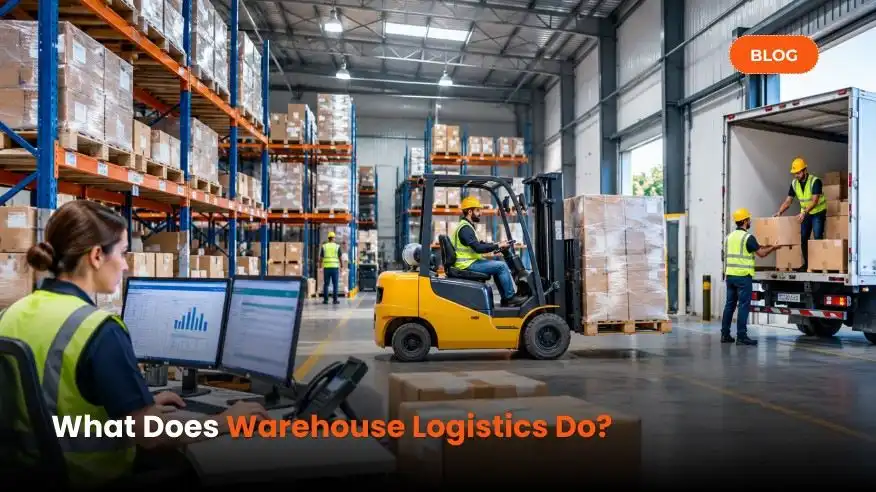
Every business that sells, manufactures, or distributes physical products needs an organized way to store and move its inventory. Products must be received, checked, stored, managed, picked, packed, and delivered to the right destination. Without proper coordination, businesses can experience inventory shortages, delayed orders, misplaced products, and unnecessary operating expenses.
This is where warehouse logistics plays an important role.
Warehouse logistics involves managing the movement, storage, handling, and distribution of goods within a warehouse and coordinating these activities with the wider supply chain. It helps businesses keep track of their inventory, organize warehouse operations, and ensure products are available when customers or distribution partners need them.
Whether a company operates a manufacturing facility, retail distribution center, or e-commerce business, effective warehouse logistics helps keep products moving through the supply chain.
In this guide, we will explain what warehouse logistics does, how it works, its main functions, common types, benefits, and how businesses can choose suitable warehousing solutions.
What Does Warehouse Logistics Do?
Warehouse logistics manages the processes involved in receiving, storing, organizing, handling, and distributing products within a warehouse.
Its primary purpose is to make sure goods move through storage facilities in an organized and efficient manner while maintaining accurate inventory records.
Warehouse logistics includes several activities, such as:
-
Receiving incoming shipments from suppliers and manufacturers.
-
Inspecting products and recording inventory information.
-
Organizing goods in appropriate storage locations.
-
Managing stock levels and inventory movement.
-
Picking and packing customer orders.
-
Preparing shipments for transportation.
-
Coordinating outgoing deliveries.
-
Managing returns and damaged inventory when required.
For example, an online retailer may receive hundreds of products from different suppliers. Warehouse logistics helps organize those products, track available stock, prepare customer orders, and coordinate deliveries.
Without an organized warehouse process, employees may spend more time locating products, handling inventory errors, and correcting order problems.
In simple terms, warehouse logistics connects product storage with the movement of goods throughout the supply chain.
How Does Warehouse Logistics Work?
Warehouse logistics follows a series of connected activities. Each stage plays a role in maintaining inventory accuracy and supporting the movement of products.
1. Receiving Incoming Goods
The process begins when products arrive at the warehouse from suppliers, manufacturers, or other distribution facilities.
Warehouse employees receive the shipment and compare the delivered goods with the relevant purchase orders, shipping documents, or delivery records.
This stage may involve:
-
Checking shipment quantities.
-
Inspecting packaging and product condition.
-
Identifying damaged or missing items.
-
Recording received inventory.
-
Assigning products for storage.
Accurate receiving procedures help prevent inventory discrepancies and ensure products enter the warehouse system correctly.
2. Inventory Inspection and Recording
After receiving the shipment, products may be inspected and recorded in the warehouse inventory system.
Information such as product descriptions, quantities, item codes, batch numbers, and storage requirements may be documented depending on the business.
Many warehouses use barcode scanning or warehouse management systems (WMS) to update inventory records.
Accurate information makes it easier for warehouse teams to locate products and understand available stock levels.
3. Storage and Organization
Once products have been received and recorded, they are moved to appropriate storage locations.
Warehouse layout and storage arrangements depend on factors such as product dimensions, weight, demand, handling requirements, and storage conditions.
For example, frequently ordered products may be placed in locations that are easier for employees to access. Fragile products may require dedicated storage arrangements, while temperature-sensitive goods may need controlled storage facilities.
Proper organization helps reduce unnecessary product movement and makes warehouse operations easier to manage.
4. Inventory Management
Inventory management is an important part of warehouse logistics.
Businesses need to know how much stock is available, where products are stored, and when additional inventory may be required.
Warehouse teams may use inventory management systems to monitor stock movement, record incoming shipments, and track outgoing orders.
Common inventory management activities include:
-
Monitoring stock levels.
-
Identifying low-stock items.
-
Recording inventory transfers.
-
Conducting physical stock counts.
-
Tracking damaged or expired products.
-
Updating inventory records.
Good inventory management helps businesses make informed purchasing and distribution decisions.
5. Order Picking
When a customer or business partner places an order, warehouse employees locate the required products and collect them from their storage locations.
This process is called order picking.
Depending on the warehouse and order volume, picking may be completed manually or supported by barcode scanners, digital systems, and automated equipment.
An organized picking process helps reduce incorrect orders and unnecessary delays.
6. Packing and Shipment Preparation
After products are picked, they are prepared for shipment.
Packing involves selecting suitable packaging materials to protect products during handling and transportation.
The process may include:
-
Checking order quantities.
-
Selecting appropriate cartons or packaging.
-
Securing products.
-
Adding shipping labels.
-
Preparing delivery documentation.
Proper packaging helps reduce the risk of damage during transportation.
7. Shipping and Distribution
The final stage involves preparing goods for outbound transportation.
Warehouse teams coordinate with carriers, freight providers, or internal transportation departments to arrange pickups and deliveries.
Products may be shipped to retailers, distributors, manufacturing facilities, fulfillment centers, or individual customers.
This is where warehouse operations connect directly with transportation and distribution logistics.
What Are the Main Functions of Warehouse Logistics?
Warehouse logistics covers several important functions that support business operations.
Inventory Control
Inventory control helps businesses maintain accurate information about the products they have in storage.
It includes monitoring stock levels, recording product movement, and identifying differences between physical inventory and system records.
Storage Management
Storage management focuses on organizing products within the warehouse.
It involves selecting suitable storage areas, maintaining warehouse layouts, and ensuring products can be accessed when needed.
Order Fulfillment
Order fulfillment involves processing customer orders from the time they are received until the products are prepared for dispatch.
It includes picking, packing, checking, and shipment preparation.
Transportation Coordination
Warehouses often work with transportation providers to move products between facilities and final delivery locations.
Coordinating pickup schedules, delivery appointments, shipment information, and carrier communication helps support distribution operations.
Returns Management
Some businesses receive products that customers or distribution partners return.
Warehouse logistics may include receiving returned goods, inspecting their condition, recording inventory changes, and determining whether items can be restocked or require further handling.
Warehouse Space Utilization
Warehouse space is a valuable operational resource.
Effective space utilization involves organizing storage locations, selecting appropriate shelving systems, and arranging products to make better use of available capacity.
What Are the Different Types of Warehouses?
Different businesses require different warehouse facilities depending on their products, distribution networks, and operational requirements.
1. Distribution Warehouses
Distribution warehouses are designed to receive products, store inventory, and prepare shipments for delivery to retailers, wholesalers, and other destinations.
They play an important role in moving goods between manufacturers and the businesses that sell or distribute them.
2. Storage Warehouses
Storage warehouses provide space for businesses to keep products, raw materials, or finished goods until they are required.
They may support short-term or longer-term storage depending on business needs.
3. Fulfillment Warehouses
Fulfillment warehouses handle activities associated with processing and shipping customer orders.
They are commonly used by e-commerce businesses and retailers that need to manage inventory, picking, packing, and outbound deliveries.
4. Refrigerated Warehouses
Refrigerated warehouses maintain controlled temperature conditions for products that require specialized storage.
Common examples include fresh food, dairy products, frozen goods, and certain pharmaceutical products.
5. Bonded Warehouses
Bonded warehouses are facilities authorized by customs authorities where imported goods can be stored under applicable customs procedures before duties and taxes are paid or other customs requirements are completed.
They are particularly relevant to international trade and import operations.
What Is the Difference Between Warehousing and Warehouse Logistics?
Warehousing and warehouse logistics are related, but they do not have exactly the same meaning.
Warehousing mainly refers to the storage of goods within a facility. Warehouse logistics covers the broader activities involved in managing inventory and moving products through the facility.
|
Warehousing |
Warehouse Logistics |
|
Focuses primarily on storing goods |
Covers storage, handling, inventory, and distribution |
|
Involves warehouse space and facilities |
Involves coordinated warehouse operations |
|
Includes organizing storage areas |
Includes receiving, picking, packing, and shipping |
|
Supports inventory storage |
Supports the movement and management of inventory |
For example, keeping products on warehouse shelves is part of warehousing. Receiving those products, recording inventory, organizing storage, preparing orders, and arranging outbound shipments are all part of warehouse logistics.
Both functions work together to support an organized supply chain.
What Are the Benefits of Warehouse Logistics?
Effective warehouse logistics can improve how businesses manage inventory, fulfill orders, and coordinate distribution.
1. Better Inventory Visibility
Organized warehouse systems help businesses understand what products are available, where they are stored, and how much inventory remains.
Better visibility supports purchasing, sales, and distribution planning.
2. Improved Order Processing
A well-organized warehouse makes it easier for employees to locate products, prepare orders, and arrange shipments.
This can reduce unnecessary handling and help improve order accuracy.
3. Better Use of Warehouse Space
Proper storage planning helps businesses make better use of available warehouse capacity.
Products can be arranged according to their dimensions, demand, storage requirements, and handling needs.
4. Reduced Inventory Errors
Accurate receiving, stock recording, and inventory tracking help reduce discrepancies between physical stock and system records.
This can help prevent situations where products appear available in the system but cannot be located in the warehouse.
5. Improved Distribution Coordination
Warehouse logistics connects storage operations with transportation activities.
Coordinated dispatch schedules and shipment preparation help businesses manage the movement of products between facilities and customers.
6. Greater Operational Visibility
Warehouse management systems and inventory tools can provide information about stock movement, order processing, and warehouse activities.
This information helps managers identify operational problems and make better decisions.
What Challenges Do Businesses Face in Warehouse Logistics?
Warehouse operations can become complicated when inventory volumes increase or business requirements change.
Some common challenges include:
Inventory Inaccuracies
Incorrect stock records can result in misplaced products, order delays, and purchasing problems.
Regular inventory checks and accurate receiving procedures help reduce these issues.
Limited Storage Space
Growing inventory levels can create pressure on available warehouse capacity.
Businesses may need to reorganize storage layouts, improve space utilization, or evaluate additional storage facilities.
Order Processing Delays
High order volumes, poor picking arrangements, and insufficient coordination can slow down warehouse operations.
Organized workflows and suitable warehouse technology can help improve processing.
Labor and Operational Costs
Warehouse activities involve employees, equipment, facility expenses, utilities, and maintenance.
Managing these resources efficiently is important for controlling operational costs.
Transportation Coordination
Delays in carrier pickups, delivery scheduling, or shipment documentation can affect outbound distribution.
Clear communication between warehouse teams and transportation providers helps manage these challenges.
What Is a Warehouse Management System (WMS)?
A warehouse management system, commonly known as WMS, is software used to manage and coordinate warehouse operations.
It helps businesses maintain visibility into inventory and organize activities such as receiving, storage, picking, packing, and shipping.
Depending on the system, common features may include:
-
Real-time inventory updates.
-
Barcode scanning.
-
Storage location management.
-
Order picking instructions.
-
Shipment preparation.
-
Inventory reporting.
-
Stock movement records.
For example, when a warehouse receives a shipment, employees may scan product barcodes to record quantities and storage locations. When an order is placed, the system can help identify where the required products are stored.
A WMS can be particularly useful for businesses managing large inventories, multiple product categories, or high order volumes.
What Should Businesses Consider When Choosing a Warehousing Provider?
Selecting a suitable warehousing provider is an important decision for businesses that need external storage and distribution support.
Before choosing a provider, consider the following factors:
1. Storage Capacity: Confirm whether the facility has enough space for your current inventory and expected storage requirements.
2. Location: Consider the warehouse's proximity to suppliers, customers, transportation routes, ports, and distribution markets.
3. Inventory Management: Ask how inventory records, stock updates, and product movements are managed.
4. Handling Capabilities: Check whether the facility can handle your product type, packaging, weight, and special storage requirements.
5. Transportation Coordination: Understand whether warehouse operations can be coordinated with incoming and outgoing freight movements.
6. Security and Facility Management: Review the available procedures for facility access, inventory protection, and general warehouse operations.
7. Flexibility: Consider whether the provider can accommodate changing inventory levels, seasonal demand, and future business requirements.
A suitable warehousing arrangement should support your company's operational needs rather than simply provide additional storage space.
How Empath Logistics Supports Warehousing and Logistics Requirements
Businesses often need more than storage space to manage their supply chains. They also need organized inventory handling, transportation coordination, and distribution arrangements that fit their operational requirements.
Empath Logistics provides logistics and transportation solutions for businesses looking to manage different freight and supply chain requirements.
Companies exploring Warehousing and Logistics Services can learn more about available warehousing options and how storage fits into broader logistics operations.
When evaluating a warehousing requirement, businesses should consider their inventory volume, product type, storage duration, pickup and delivery locations, and distribution schedules.
For companies managing shipments across different states, Interstate Warehousing can also be considered as part of their wider storage and distribution planning.
Choosing appropriate Warehousing Solutions involves understanding how storage facilities, inventory management, and transportation arrangements work together to support business operations.
Conclusion
Warehouse logistics plays an important role in keeping modern supply chains organized. It manages the movement of products within storage facilities, from receiving and inventory management to order fulfillment and outbound shipping.
For manufacturers, retailers, wholesalers, and e-commerce businesses, effective warehouse operations can improve inventory visibility, support accurate order processing, and help coordinate product distribution.
However, successful warehousing involves more than finding space to store goods. It requires proper planning, organized inventory processes, suitable facilities, and coordination with transportation activities.
Businesses looking to improve their storage and distribution operations should evaluate warehousing arrangements that match their product requirements and supply chain needs.
Explore More Insights:
Warehousing vs. Logistics: Key Differences Every Business Should Know
What are the 7 Types of Warehouses?
Frequently Asked Questions About Warehouse Logistics
1. What does warehouse logistics do in simple terms?
Warehouse logistics manages how goods are received, stored, organized, tracked, picked, packed, and shipped from a warehouse. It helps businesses control inventory and coordinate product movement throughout the supply chain.
2. What are the main activities of warehouse logistics?
The main activities include receiving shipments, inspecting goods, inventory management, storage, order picking, packing, shipping, and returns handling.
3. Why is warehouse logistics important?
Warehouse logistics helps businesses maintain inventory accuracy, organize storage, process orders, coordinate deliveries, and manage the movement of products more effectively.
4. What is the difference between warehousing and logistics?
Warehousing focuses mainly on storing goods, while logistics covers the broader planning and movement of products across the supply chain. Warehouse logistics combines storage activities with inventory handling and distribution coordination.
5. What are the different types of warehouses?
Common types include distribution warehouses, storage warehouses, fulfillment centers, refrigerated warehouses, and bonded warehouses. Each serves different business and product requirements.
6. What is a warehouse management system?
A warehouse management system is software that helps manage warehouse activities such as inventory tracking, receiving, storage, picking, packing, and shipping.
7. How does warehouse logistics help e-commerce businesses?
Warehouse logistics helps e-commerce businesses manage inventory, process customer orders, prepare packages, and coordinate deliveries. It supports organized order fulfillment as sales volumes change.
8. What factors affect warehousing costs?
Warehousing costs may depend on storage space, inventory volume, storage duration, product handling requirements, location, labor, equipment, and additional services.
9. What is interstate warehousing?
Interstate warehousing refers to warehouse storage and distribution arrangements that support the movement and management of goods across different states. It can help businesses position inventory closer to regional markets and coordinate wider distribution networks.
10. How do I choose the right warehousing solution?
Consider storage capacity, warehouse location, inventory management capabilities, product handling requirements, transportation access, security procedures, and flexibility before selecting a warehousing provider.
Share:

-
 Road Freight
-
Reefer Freight
-
Ocean Freight
-
Logistics Insight
-
Less Than Truckload
-
Full Truck Load
-
Cargo
-
Drayage
-
Power only Trucking
-
Flatbed Trucking
-
Intermodal
-
Cross Border
-
3PL
-
Supply Chain
-
Warehousing vs. Logistics
-
Full Container Load
-
Refrigerated Transport Services
-
Temperature-Controlled Shipping
-
Warehouse





‘0’ Comments
Leave A Comments