

Oct 29, 2026

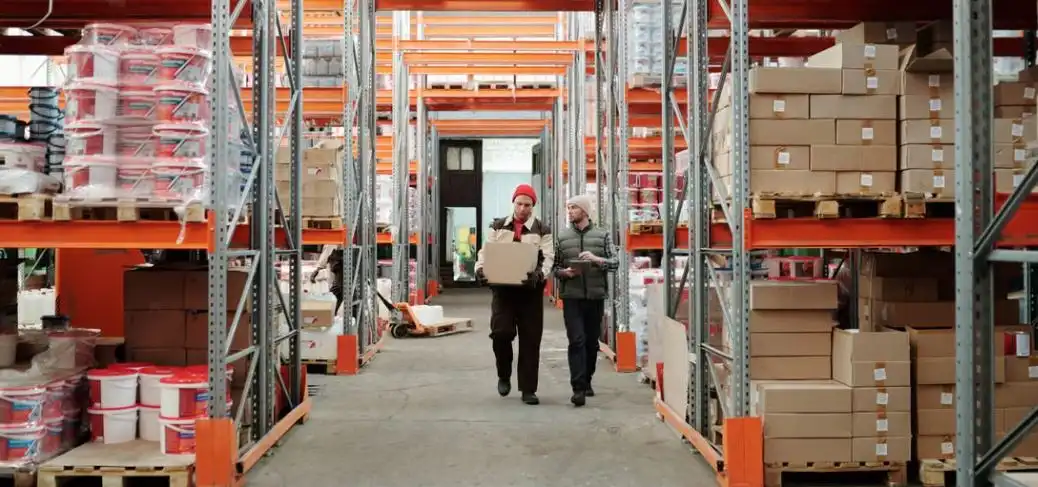
Warehouses play an important role in keeping supply chains organized and ensuring products reach customers on time. From storing raw materials to managing finished goods, businesses rely on warehouses to protect inventory, improve order fulfillment, and maintain a steady flow of products. However, not every warehouse serves the same purpose. Different industries need different storage facilities depending on their products, delivery schedules, storage conditions, and operational requirements.
Understanding the seven types of warehouses can help business owners, retailers, manufacturers, and logistics managers choose a suitable storage solution. Some warehouses are designed for general merchandise, while others specialize in temperature-sensitive goods, government supplies, or goods that require secure handling.
In this guide, we will explore the seven main types of warehouses, explain how they work, and discuss their benefits and common applications. We will also look at how warehousing supports modern logistics and helps businesses manage inventory more efficiently.
A warehouse is a designated facility used to store goods, materials, and products before they are distributed, sold, manufactured, or delivered to their final destination. Warehouses may operate as standalone storage facilities or as part of a larger supply chain network.
Modern warehouses often use inventory management software, barcode scanning, material-handling equipment, and automated systems to track products and speed up daily operations. Depending on the business, a warehouse may handle anything from raw manufacturing materials and retail products to frozen food and pharmaceutical supplies.
Businesses can also use professional
to support inventory storage, product handling, and distribution requirements without managing every warehouse activity themselves.
The seven commonly recognized warehouse types are public warehouses, private warehouses, bonded warehouses, distribution centers, fulfillment centers, climate-controlled warehouses, and smart or automated warehouses.
Each type has a different purpose. The right choice depends on a company's budget, inventory volume, product characteristics, delivery expectations, and supply chain strategy.
A public warehouse is a storage facility operated by a third-party company that rents space to different businesses. Companies do not need to purchase a building or invest heavily in warehouse infrastructure. Instead, they pay for the storage space and services they require.
Public warehouses are particularly useful for small businesses, startups, retailers, and companies with changing inventory levels. For example, an online store may need additional space during a festive sale but require less storage during quieter months.
Key benefits of public warehouses:
Lower initial investment compared with building a private facility.
Flexible storage options for changing business requirements.
Access to professional storage and handling services.
Potential access to inventory management and distribution support.
Best suited for: Small and medium-sized businesses, seasonal retailers, e-commerce sellers, and companies that need flexible storage capacity.
The main consideration is that businesses may have less control over warehouse layouts, operating procedures, and customized storage arrangements.
A private warehouse is owned or leased and operated by a single business to store its own inventory. Manufacturers, wholesalers, retailers, and large distributors commonly use this type of facility when they need consistent storage capacity and greater control over daily operations.
For instance, a manufacturing company might maintain a private warehouse near its production facility to store raw materials and finished products before dispatch.
Key benefits of private warehouses:
Greater control over inventory management and warehouse operations.
Freedom to customize storage layouts and processes.
Better integration with the company's internal systems.
Greater control over security and product handling.
Best suited for: Large manufacturers, established retailers, wholesalers, and businesses with predictable, high-volume storage requirements.
However, private warehousing requires substantial investment in facilities, equipment, staff, utilities, and maintenance. Businesses must evaluate whether their regular storage needs justify these ongoing costs.
A bonded warehouse is a facility authorized to store imported goods under customs control before applicable duties are paid. The rules governing storage, documentation, and the release of goods depend on the country and the relevant customs regulations.
This type of warehouse can be valuable for businesses involved in international trade. Instead of immediately releasing imported goods into the domestic market, an importer may keep them in an approved bonded facility until the required customs procedures are completed.
For example, an electronics importer bringing products into a country may use bonded storage while arranging documentation, distribution, and other import requirements.
Key benefits of bonded warehouses:
May allow customs duty payments to be deferred until goods are released, subject to applicable rules.
Provide controlled storage for eligible imported goods.
Support international shipping and import-export operations.
Give importers more flexibility when coordinating inventory and distribution.
Best suited for: Importers, exporters, international traders, and businesses that regularly handle overseas shipments.
Bonded warehouses require careful documentation and compliance with customs requirements. Businesses should confirm the applicable rules before choosing this storage option.
A distribution center is designed to receive goods from multiple suppliers, organize inventory, process shipments, and distribute products to retailers, wholesalers, stores, or end customers.
Although distribution centers provide storage, their primary focus is the efficient movement of goods. Inventory may remain in the facility for a relatively short period before being dispatched to its next destination.
For example, a retail company may receive products from several manufacturers at a central distribution center before sending them to stores across different cities.
Key benefits of distribution centers:
Faster movement of goods through the supply chain.
Efficient sorting, consolidation, and dispatch of shipments.
Better coordination between suppliers and delivery destinations.
Support for high-volume inventory movement.
Best suited for: Retail chains, wholesalers, manufacturers, distributors, and businesses managing large shipment volumes.
Location is an important factor when selecting a distribution center. Facilities near major roads, transportation hubs, and customer markets may help businesses reduce transit times and improve delivery coordination.
A fulfillment center specializes in processing customer orders. Its activities typically include receiving products, storing inventory, picking ordered items, packing shipments, and preparing them for delivery.
Fulfillment centers are particularly important for e-commerce businesses, where customers expect accurate orders and timely shipping.
Consider an online clothing store that receives hundreds of orders daily. A fulfillment center can organize its inventory, pick the correct products, pack them, and prepare each shipment for the delivery provider.
Key benefits of fulfillment centers:
Faster order processing and dispatch.
Organized picking, packing, and shipping operations.
Support for large numbers of individual customer orders.
Reduced need for businesses to manage fulfillment independently.
Best suited for: E-commerce brands, online retailers, direct-to-consumer businesses, and companies selling products through multiple online channels.
Businesses should evaluate order-processing speed, inventory visibility, returns handling, storage fees, and integration with their sales platforms before selecting a fulfillment partner.
A distribution center and a fulfillment center may appear similar, but their priorities often differ. Distribution centers generally emphasize moving goods in bulk through a supply chain, while fulfillment centers focus more heavily on processing individual customer orders.
Climate-controlled warehouses maintain specific environmental conditions to protect products from unsuitable temperatures, humidity, or other environmental factors. Cold storage warehouses are a specialized category designed to keep goods refrigerated or frozen.
These facilities are important because some products can lose quality, become damaged, or become unsafe when exposed to unsuitable storage conditions.
Examples include fresh produce, dairy products, frozen food, pharmaceuticals, and other temperature-sensitive materials.
Key benefits of climate-controlled warehouses:
Help maintain product quality during storage.
Reduce spoilage and damage caused by unsuitable conditions.
Support the handling of temperature-sensitive inventory.
Provide monitoring and environmental controls appropriate to the products stored.
Best suited for: Food producers, grocery distributors, pharmaceutical businesses, agricultural suppliers, and companies handling sensitive products.
The right storage temperature depends on the product. A refrigerated facility suitable for fresh vegetables may not be appropriate for frozen food or certain pharmaceutical products. Businesses should check temperature requirements, monitoring procedures, backup systems, and applicable safety standards before choosing a facility.
These warehouses can also have higher operating costs because of refrigeration equipment, insulation, energy consumption, and specialized maintenance.
Smart and automated warehouses use digital systems, machinery, and sometimes robotics to improve storage, inventory tracking, and product movement.
Depending on the facility, automation may include conveyor belts, automated storage and retrieval systems, barcode scanners, robotic picking equipment, sensors, and warehouse management software.
These technologies help businesses manage inventory more efficiently and reduce repetitive manual tasks.
For example, a large distribution business may use automated equipment to retrieve products from storage racks and transport them to packing stations. Inventory software can also help employees identify product locations and track stock movements.
Key benefits of smart warehouses:
Improved inventory visibility and tracking.
Faster picking, sorting, and product retrieval.
Potential reductions in manual errors.
Better use of available storage space.
Access to operational data for planning and decision-making.
Best suited for: Large retailers, high-volume e-commerce companies, manufacturers, and logistics businesses with complex inventory requirements.
The initial investment can be significant, particularly when advanced robotics and integrated software are required. Maintenance, employee training, system integration, and technology upgrades should also be considered.
Not every business needs a fully automated facility. A smaller warehouse may achieve meaningful improvements through inventory software, barcode scanning, and better storage organization alone.
These warehouse classifications and their typical uses are consistent with industry guidance from the Association for Supply Chain Management and established warehousing resources.
The following table summarizes the main differences between these warehouse types.
|
Warehouse type |
Main purpose |
Suitable for |
|
Public warehouse |
Rented storage and related services |
Startups and growing businesses |
|
Private warehouse |
Dedicated company inventory storage |
Large manufacturers and retailers |
|
Bonded warehouse |
Customs-controlled storage for eligible imported goods |
Importers and international traders |
|
Distribution center |
Sorting and distributing goods |
Wholesalers and retail chains |
|
Fulfillment center |
Picking, packing, and shipping customer orders |
E-commerce businesses |
|
Climate-controlled warehouse |
Maintaining specific storage conditions |
Food and temperature-sensitive products |
|
Smart or automated warehouse |
Technology-supported storage and handling |
High-volume operations |
These categories are not always mutually exclusive. For example, a public warehouse may also operate as a fulfillment center, while a private distribution center may use automated storage systems.
Warehousing involves more than keeping products in a building. It supports several activities that help businesses maintain an efficient supply chain.
Warehouses help businesses organize stock, track product quantities, and identify when inventory needs replenishment. Accurate inventory records can reduce stock shortages and excess storage.
An organized warehouse makes it easier to locate products, prepare orders, and dispatch shipments. Efficient processes can reduce delays and help prevent incorrect orders.
Appropriate storage conditions, secure handling, and organized inventory placement help protect products from damage, contamination, and loss.
Warehouses can consolidate goods from different suppliers, organize outbound shipments, and coordinate dispatch schedules. This can simplify transportation planning.
When products are stored correctly and orders are processed efficiently, businesses are better positioned to meet customer expectations for availability and delivery.
For companies reviewing their supply chain operations, professional
can be worth considering when internal storage capacity or fulfillment resources become difficult to manage.
Choosing a warehouse requires a clear understanding of your products, operating costs, and distribution requirements. Before making a decision, consider the following factors.
Product type: Determine whether your products need ordinary storage, refrigeration, humidity control, or specialized handling.
Inventory volume: Estimate the amount of space you need today and how your storage requirements may change as your business grows.
Order frequency: Businesses shipping individual customer orders may benefit from fulfillment services, while bulk distributors may prioritize distribution centers.
Location: Consider proximity to suppliers, customers, ports, highways, and other important transportation routes.
Budget: Compare rental charges, handling fees, equipment costs, labor expenses, and technology requirements.
Technology: Decide whether basic inventory tracking is sufficient or whether you need advanced warehouse management systems and automation.
Scalability: Choose a solution that can accommodate seasonal demand, business expansion, and changes in order volume.
Security and compliance: Check access controls, inventory tracking, insurance arrangements, and any industry-specific storage requirements.
For additional information about warehouse options and logistics support, visit
to explore relevant services and supply chain solutions.
Even a well-located warehouse may not be suitable if it does not match a company's operational needs. Avoid these common mistakes:
Choosing a facility based only on its rental price.
Underestimating seasonal changes in inventory volume.
Ignoring product-specific storage requirements.
Overlooking inventory accuracy and reporting capabilities.
Failing to account for handling, packaging, and dispatch fees.
Selecting a location without reviewing transportation access.
Investing in advanced automation before understanding actual business needs.
Comparing these factors in advance can help businesses avoid unnecessary costs and choose a warehouse that supports their long-term plans.
Understanding the seven types of warehouses helps businesses make informed decisions about inventory storage, order fulfillment, and distribution. Public and private warehouses provide different ownership and access arrangements, bonded warehouses support eligible international trade activities, and distribution and fulfillment centers help move products efficiently through the supply chain. Climate-controlled facilities protect sensitive goods, while smart warehouses use technology to improve operational performance.
The best option depends on your products, business size, budget, and delivery requirements. By evaluating these factors carefully, you can select a warehousing solution that supports reliable operations and future growth.
Whether you need storage, inventory handling, or broader supply chain support, Empath Logistics is a resource to explore when evaluating warehousing and logistics solutions for your business.
Read Our More Latest Blogs:
How to Prevent Temperature Excursions During Freight Shipping
Reefer Container vs. Refrigerated Truck: What's the Difference?
Reefer Freight Shipping Costs: Factors Businesses Should Know
Understanding Temperature Requirements for Reefer Freight
How to Choose the Best Ocean Freight Services for Your Business
What are Refrigerated Transport Services and How Do They Work?
Warehousing vs. Logistics: Key Differences Every Business Should Know
What is Full Container Load (FCL) Shipping?
Seven commonly discussed types are public warehouses, private warehouses, bonded warehouses, distribution centers, fulfillment centers, climate-controlled warehouses, and smart or automated warehouses. Each serves different storage, handling, or distribution requirements.
A public warehouse provides storage space and related services to multiple businesses for a fee. A private warehouse is owned or leased and operated by a single company for its own inventory. Public warehousing usually offers greater flexibility, while private warehousing provides more operational control.
Fulfillment centers are often a suitable option because they handle inventory storage, order picking, packing, and shipping. However, the best solution depends on order volume, product size, delivery expectations, and budget.
A bonded warehouse stores eligible imported goods under customs control before applicable duties are paid. Goods must be released according to the relevant customs requirements and procedures.
A traditional warehouse generally emphasizes storing inventory, sometimes for extended periods. A distribution center focuses more on receiving, sorting, processing, and dispatching goods efficiently. In practice, many facilities perform both functions.
Climate-controlled warehouses help maintain suitable environmental conditions for products that may be damaged by temperature or humidity changes. They are commonly used for food, pharmaceuticals, and other sensitive goods.
A smart warehouse uses digital technology, connected systems, and potentially automated equipment to improve inventory tracking, storage, picking, and overall operational efficiency.
Evaluate your product requirements, inventory volume, order frequency, location, budget, technology needs, and plans for growth. Comparing these factors can help you select a warehouse that matches your operational goals.
Share:






‘0’ Comments
Leave A Comments