Jul 15, 2026

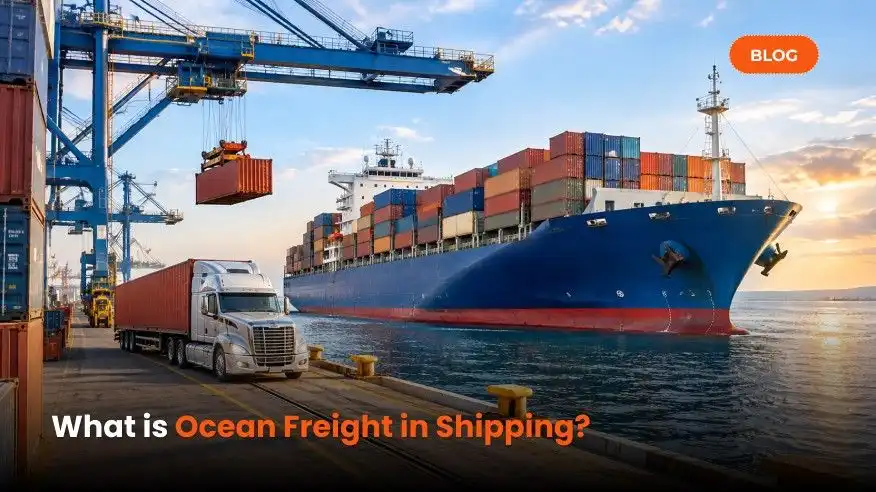
Ocean freight is one of the most widely used methods of transporting goods between countries. It involves moving cargo across oceans and seas using cargo ships. Businesses rely on ocean freight to transport large quantities of products, raw materials, machinery, vehicles, food products, and other commercial goods from one country to another.
For companies involved in international trade, ocean shipping offers a practical way to move substantial volumes of cargo over long distances. Compared with air freight, it generally provides a more economical option for large or heavy shipments, although transit times are usually longer.
Ocean freight also plays an important role in global supply chains by connecting manufacturers, suppliers, distributors, retailers, and customers across international markets.
Understanding how ocean freight works can help businesses choose the right shipping method, plan transportation costs, and manage international deliveries more effectively.
In this guide, we will explain what ocean freight is, how the shipping process works, its different types, advantages, costs, and the importance of supporting transportation services.
Ocean freight involves several stages, starting with cargo preparation and ending with delivery to the final destination. Each stage requires coordination between shippers, shipping companies, port authorities, customs officials, and inland transportation providers.
Here is how the process generally works.
The first step is preparing goods for international transportation. Products are packed, labeled, and secured to protect them during loading, handling, and the sea journey.
Depending on the type of cargo, businesses may use pallets, cartons, crates, drums, or specialized packaging. Proper packaging helps reduce the risk of damage during transportation.
Once the cargo is ready, the shipper arranges space with an ocean carrier or through a freight logistics provider.
The booking depends on several factors, including:
Cargo weight and dimensions
Shipping origin and destination
Container requirements
Preferred departure schedule
Type of goods being transported
Businesses must select the appropriate shipping arrangement based on their cargo volume and delivery requirements.
After booking, the cargo is transported to the departure port. This may involve trucks, rail transportation, or other inland freight services.
For containerized shipments, containers may need to be collected from a shipping facility and delivered to the port before the vessel's scheduled departure.
Before cargo can leave the country, the required export documentation must be prepared and submitted.
Depending on the shipment and countries involved, documents may include:
Commercial invoice
Packing list
Bill of lading
Export declaration
Certificate of origin, when required
Other permits or certificates applicable to the cargo
Incorrect or incomplete documentation can result in customs delays and additional expenses.
After completing the necessary port procedures, the cargo is loaded onto the vessel.
The ship transports the goods across the ocean to the destination port. Transit time depends on the shipping route, distance, vessel schedule, port congestion, weather, and other operational factors.
When the vessel reaches the destination port, the shipment goes through the applicable import procedures.
Customs authorities may review shipment documents, assess duties and taxes, and inspect cargo when required. The importer or its authorized customs broker generally coordinates the necessary clearance procedures.
Once the cargo is released from the port, it must be transported to the final delivery location.
This stage may involve container trucking, rail transportation, or other inland freight arrangements. Depending on the shipping agreement, delivery may be made directly to a warehouse, distribution center, manufacturing facility, or business location.
This complete process connects international sea transportation with domestic logistics operations.
Ocean freight offers different shipping options depending on the size, weight, nature, and handling requirements of the cargo.
The most common options include the following.
Full Container Load, commonly known as FCL, is a shipping arrangement in which one shipper books an entire container for their cargo.
The container is allocated to a single shipment, even if the shipper does not fill every available space.
FCL is commonly used by businesses transporting large quantities of products or shipments that require dedicated container space.
Key benefits of FCL shipping:
Dedicated container space for one shipment
Less handling associated with cargo consolidation
Suitable for larger shipment volumes
Better control over container loading arrangements
Useful for regular international shipping requirements
Less Than Container Load, or LCL, is an option for businesses that do not have enough cargo to fill an entire shipping container.
Under this arrangement, shipments from multiple customers are consolidated into one container. Each shipper pays for the space occupied by their cargo, subject to applicable minimum charges and other fees.
LCL can be useful for small and medium-sized businesses that import or export smaller quantities of goods.
Key benefits of LCL shipping:
No need to book an entire container
Suitable for smaller cargo volumes
Shared container transportation
Flexible shipping arrangements
Can help businesses manage shipping expenses
Roll-on/Roll-off shipping is designed for cargo that can be driven or rolled onto and off a vessel.
It is commonly used to transport cars, trucks, buses, trailers, and certain types of heavy equipment.
Instead of loading every vehicle into a standard shipping container, the cargo is secured inside a specially designed vessel.
Breakbulk shipping is used for cargo that cannot easily fit into standard containers or needs to be transported as individual pieces.
Examples include:
Industrial machinery
Large construction equipment
Steel structures
Heavy manufacturing components
Oversized project cargo
Each cargo item is handled and secured according to its size, weight, and transportation requirements.
Bulk shipping involves transporting large quantities of unpackaged materials directly inside a ship's cargo holds or dedicated tanks.
There are two main categories:
Dry bulk cargo: Includes coal, grain, iron ore, cement, and other dry materials.
Liquid bulk cargo: Includes petroleum, chemicals, vegetable oils, and other liquid commodities.
Bulk vessels are designed to transport substantial quantities of these materials efficiently.
Ocean freight supports a wide range of commercial and industrial shipping requirements.
Some common examples include:
|
Industry |
Commonly Transported Goods |
|
Manufacturing |
Machinery, equipment, and raw materials |
|
Retail and E-commerce |
Furniture, clothing, and consumer products |
|
Automotive |
Vehicles, spare parts, and components |
|
Agriculture |
Grains, packaged food, and agricultural products |
|
Construction |
Steel, building materials, and equipment |
|
Electronics |
Computers, appliances, and electronic components |
|
Healthcare |
Medical equipment and approved pharmaceutical cargo |
|
Furniture |
Home furniture, fixtures, and furnishings |
Certain goods require special handling, temperature control, packaging, or regulatory approvals. Businesses should confirm that the selected shipping arrangement is suitable for their specific cargo.
Ocean freight remains an important transportation option for companies involved in international trade. Its advantages make it suitable for businesses moving large volumes of goods over long distances.
One of the biggest advantages of sea freight is its cost efficiency for many large or heavy shipments.
Compared with air transportation, ocean freight generally offers lower transportation costs per unit when shipping substantial cargo volumes.
This can help businesses manage logistics expenses, especially when transporting products in large quantities.
Cargo vessels can transport large quantities of goods in a single journey.
Businesses can ship multiple containers, heavy machinery, industrial equipment, and bulk commodities without relying on multiple smaller transportation movements.
Ocean freight connects major ports and international markets, allowing businesses to import raw materials and export finished products across different countries.
It supports international supply chains by connecting manufacturers, suppliers, wholesalers, distributors, and retailers.
Businesses can choose between FCL, LCL, RoRo, breakbulk, and bulk shipping based on their cargo requirements.
This flexibility makes ocean transportation suitable for different industries and shipment sizes.
Some products are difficult or expensive to transport by air. Ocean vessels provide suitable transportation options for oversized equipment, industrial machinery, vehicles, and other heavy cargo.
Ocean freight can support planned inventory movements when businesses have sufficient time to organize shipments.
Companies can coordinate vessel schedules, warehouse capacity, inventory levels, and inland transportation to maintain a more organized supply chain.
Although ocean shipping offers several advantages, businesses should also understand its limitations before selecting this transportation method.
Ocean freight generally takes longer than air transportation. International shipments may spend several weeks in transit, depending on the route and operational conditions.
It may not be suitable for urgent deliveries or products with very short shelf lives unless appropriate arrangements are available.
Busy ports, vessel schedule changes, weather conditions, and operational disruptions can affect shipment timelines.
Businesses should consider possible delays when planning inventory replenishment and delivery schedules.
International ocean shipping may involve port handling, terminal charges, documentation fees, customs-related expenses, and inland transportation costs.
These expenses should be considered when calculating the total landed cost of imported goods.
International shipping requires accurate paperwork and compliance with applicable customs regulations.
Missing or incorrect documents can delay cargo clearance and create additional administrative work.
Some high-value, urgent, or highly time-sensitive shipments may be better suited to air freight or another transportation method.
The right choice depends on the cargo, budget, delivery deadline, and business requirements.
Ocean freight costs vary depending on the shipment's requirements, shipping route, cargo characteristics, and current market conditions.
There is no single price that applies to every international shipment. Businesses should consider the complete transportation cost rather than looking only at the ocean carrier's freight rate.
The following factors commonly influence ocean freight pricing.
The distance between the origin and destination ports can affect transportation costs. Different shipping routes also have different vessel schedules, port charges, and operational requirements.
Shipment dimensions and weight are important when calculating transportation costs.
For LCL shipments, pricing commonly considers the cargo's volume and weight under the applicable rating rules. FCL pricing generally depends on the container type, route, and other booking conditions.
Standard containers, refrigerated containers, and specialized equipment may have different transportation rates.
For example, temperature-sensitive products may require refrigerated containers, which involve additional equipment and operating costs.
Origin and destination ports may apply charges for terminal handling, container movement, documentation, and other services.
These expenses can vary by location and shipping arrangement.
Import duties, taxes, customs brokerage fees, and other government charges can increase the total cost of an international shipment.
These amounts depend on the destination country's regulations, product classification, declared value, and applicable trade requirements.
Ocean freight usually covers the sea transportation portion of a shipment, but businesses may also need transportation from the factory or warehouse to the origin port and from the destination port to the final delivery location.
These additional transportation costs should be included when comparing shipping quotations.
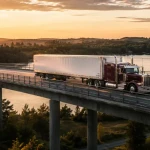
Drayage is an important part of the ocean freight transportation process. It involves moving shipping containers over relatively short distances, usually between ports, rail terminals, warehouses, and distribution centers.
Although ocean freight handles the international movement of cargo, drayage connects the port with inland transportation facilities.
For example, consider a US retailer importing furniture from another country.
The cargo arrives at a US port inside a shipping container. After completing the required import clearance procedures, the container must be transported from the port to the retailer's warehouse.
This short-distance container movement is known as drayage.
Without properly coordinated inland container transportation, businesses may experience delays in receiving imported products.
Drayage supports several important activities within international shipping:
Moving import containers from ports to warehouses
Transporting export containers to departure terminals
Connecting ocean freight with rail transportation
Supporting container movement between logistics facilities
Returning empty containers to designated locations
Coordinating container pickup and delivery schedules
Businesses can use professional Drayage Services to coordinate short-distance container movements between ports, terminals, and inland facilities.
Similarly, Drayage Trucking Services help connect international container shipping with domestic transportation requirements.
These services are particularly important for importers, exporters, manufacturers, retailers, and companies managing regular container shipments.
Ocean freight and air freight are two common methods of international cargo transportation. Both help businesses move products between countries, but they serve different shipping requirements.
|
Comparison |
Ocean Freight |
Air Freight |
|
Transportation method |
Cargo ships |
Cargo aircraft |
|
Transit time |
Generally longer |
Generally faster |
|
Shipping cost |
Usually economical for large shipments |
Generally more expensive |
|
Cargo capacity |
Suitable for large and heavy cargo |
More restricted by aircraft capacity |
|
Best suited for |
Bulk, heavy, and planned shipments |
Urgent and time-sensitive shipments |
|
Common cargo |
Furniture, machinery, raw materials |
Electronics, urgent supplies, high-value goods |
Which option should businesses choose?
Ocean freight is generally suitable when cost efficiency and cargo capacity are important considerations.
Air freight may be a better option when delivery speed is a priority or when products need to reach their destination quickly.
Businesses should compare transit times, total shipping costs, cargo requirements, and delivery deadlines before selecting a transportation method.
Choosing a suitable logistics provider is important for managing international shipments efficiently. A reliable provider should understand your cargo requirements, shipping routes, documentation needs, and delivery expectations.
Here are some factors businesses should consider.
Before selecting a provider, identify what you need to transport.
Consider the following:
Type of goods
Shipment weight and dimensions
Origin and destination
Required delivery timeline
FCL or LCL requirements
Special cargo handling requirements
Having this information ready helps logistics providers recommend an appropriate shipping arrangement.
Look for a provider that can coordinate suitable container shipping arrangements, including FCL and LCL options.
If your business regularly imports or exports different types of cargo, having access to multiple transportation solutions can make shipment planning easier.
Ask for a detailed quotation that explains the services included and any additional charges.
Check whether the quotation covers ocean transportation, port handling, customs-related support, and inland transportation.
Understanding these details helps prevent unexpected expenses.
International shipments require proper documentation and compliance with relevant import and export requirements.
Choose a provider that can help coordinate shipping paperwork and customs clearance arrangements.
Ocean transportation is only one part of the international shipping process.
Your shipment may also require container pickup, port delivery, warehouse transportation, or rail connections.
A provider that can coordinate these requirements can help simplify the movement of cargo from origin to destination.
International shipping involves more than booking space on a cargo vessel. Businesses also need to coordinate cargo preparation, container selection, documentation, port procedures, and final delivery.
Empath Logistics provides ocean freight solutions for businesses managing international imports and exports.
Its ocean freight services include Full Container Load (FCL), Less Than Container Load (LCL), import and export shipping, door-to-door ocean freight, cargo consolidation, customs clearance support, and heavy or oversized cargo transportation.
The company also provides supporting logistics solutions, including drayage and multimodal transportation, to help coordinate different stages of the shipping process.
Businesses can explore its ocean freight services to understand the available shipping options and discuss their transportation requirements.
When planning an international shipment, provide accurate cargo details, origin and destination information, and delivery expectations to help determine a suitable transportation arrangement.
Ocean freight plays an important role in international trade by helping businesses transport goods across countries and continents. It provides different shipping options, including FCL, LCL, RoRo, breakbulk, and bulk transportation, making it suitable for a wide range of cargo requirements.
However, successful ocean shipping requires more than choosing a vessel. Businesses must also consider cargo preparation, shipping documentation, customs procedures, port handling, and inland container transportation.
Understanding these stages helps companies plan shipments, manage costs, and maintain better control over their supply chains.
For businesses looking to organize international cargo transportation, Empath Logistics offers ocean freight and supporting logistics solutions designed around different shipping requirements.
Related Articles You May Find Helpful:
How to Choose the Best Ocean Freight Services for Your Business
What are Refrigerated Transport Services and How Do They Work?
What is Full Container Load (FCL) Shipping?
Common Challenges in Refrigerated Freight Transportation
Understanding Temperature Requirements for Reefer Freight
Ocean freight is the transportation of goods from one country to another using cargo ships. It is commonly used to move containers, machinery, raw materials, vehicles, and commercial products across oceans.
Yes. Ocean freight and sea freight generally refer to the transportation of cargo by ships across seas and oceans. Both terms are commonly used in international logistics.
Ocean freight transit times depend on the origin, destination, shipping route, vessel schedule, port conditions, and customs procedures. International shipments may take several weeks, although actual transit times vary.
FCL means Full Container Load, where one shipper books an entire container for a shipment. LCL means Less Than Container Load, where multiple customers share container space and pay according to their cargo requirements.
Ocean freight is generally more economical than air freight for large, heavy, and high-volume shipments. However, the actual cost depends on cargo size, route, service requirements, and additional charges.
Common documents include a commercial invoice, packing list, bill of lading, and applicable customs declarations. Depending on the cargo and destination, additional certificates, licenses, or permits may be required.
Drayage is the short-distance transportation of shipping containers between ports, rail terminals, warehouses, and distribution centers. It connects ocean transportation with inland logistics.
Yes. Small businesses can use LCL shipping when their cargo volume is not sufficient to fill an entire container. This allows them to share container space with other shipments.
Ocean freight is suitable for many products, including furniture, clothing, electronics, industrial machinery, vehicles, raw materials, and packaged consumer goods. Specialized cargo may require specific handling arrangements.
Shipping costs are influenced by cargo weight and volume, origin and destination, container type, shipping route, port charges, customs-related expenses, and inland transportation requirements.
Share:

 Road Freight
Reefer Freight
Ocean Freight
Logistics Insight
Less Than Truckload
Full Truck Load
Cargo
Drayage
Power only Trucking
Flatbed Trucking
Intermodal
Cross Border
3PL
Supply Chain
Warehousing vs. Logistics
Full Container Load
Refrigerated Transport Services
Temperature-Controlled Shipping
Warehouse

‘0’ Comments
Leave A Comments