Nov 18, 2026

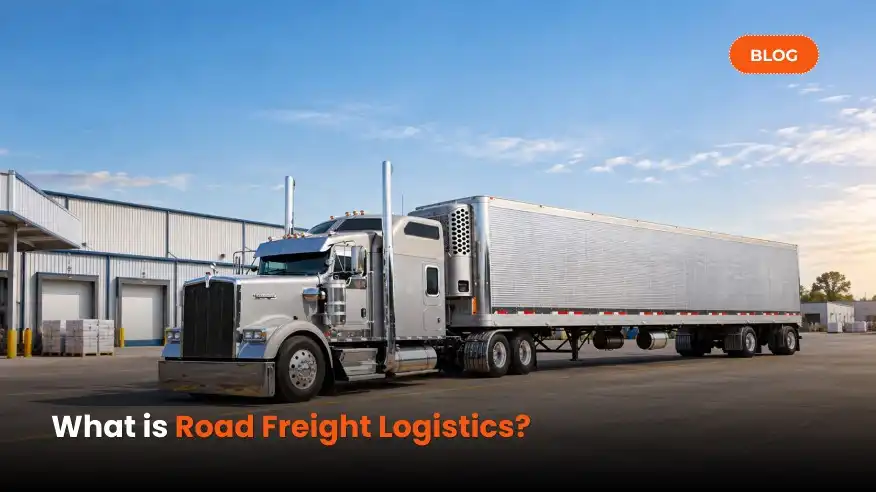
Moving goods from one location to another is an essential part of running a business. Manufacturers need to deliver products to distributors, retailers need to replenish their inventory, and suppliers must ensure that shipments reach customers on time. Among the different transportation methods available, road freight plays an important role in keeping goods moving across cities, states, and regions.
But what exactly is road freight logistics, and how does it work?
Road freight logistics refers to the planning, coordination, and transportation of goods using road-based vehicles such as trucks, trailers, and other commercial vehicles. It connects manufacturers, warehouses, distribution centers, retailers, and customers through organized transportation networks.
Businesses across different industries depend on road freight because it offers flexible delivery options, access to a wide range of locations, and transportation solutions for different shipment sizes.
In this guide, we will explain what road freight logistics means, how the process works, the different types of road freight transportation, its benefits, common challenges, and how businesses can choose suitable transportation solutions.
Road freight logistics is the process of transporting commercial goods through road networks using vehicles such as trucks, vans, and trailers.
It includes more than simply moving cargo from one place to another. The process involves shipment planning, vehicle selection, route coordination, cargo handling, delivery scheduling, and communication between the different parties involved.
For example, a manufacturer producing packaged food may need to transport finished products from its warehouse to distribution centers in different states. Road freight logistics helps coordinate the vehicles, routes, schedules, and transportation arrangements required to move those goods.
Similarly, an online retailer may use road transportation to move inventory from a fulfillment center to regional warehouses before products are delivered to customers.
Road freight is commonly used for domestic transportation because road networks connect industrial areas, commercial centers, ports, warehouses, and retail locations.
Depending on the shipment requirements, businesses can arrange full truckload transportation, less than truckload shipping, refrigerated freight, flatbed transportation, and other specialized road freight solutions.
Road freight logistics involves several stages that help ensure goods move from the pickup location to their final destination.
Each stage requires coordination between shippers, freight providers, carriers, drivers, warehouses, and receiving businesses.
The first step is understanding the shipment requirements.
Before transportation begins, the shipper provides information about the cargo, including its weight, dimensions, quantity, pickup location, delivery destination, and preferred delivery schedule.
Special requirements such as temperature control, fragile cargo handling, or oversized transportation should also be identified.
This information helps determine the most appropriate transportation arrangement.
Different types of cargo require different vehicles.
For example, standard packaged products can often be transported using dry van trailers, while frozen food requires refrigerated transportation. Heavy machinery and oversized equipment may need flatbed trailers.
Selecting suitable equipment helps ensure that cargo can be transported according to its handling and transportation requirements.
Route planning is another important part of road freight logistics.
Transportation teams consider factors such as:
Distance between pickup and delivery locations.
Road conditions and accessibility.
Traffic congestion.
Delivery deadlines.
Vehicle restrictions.
Fuel and operating expenses.
Weather conditions.
Effective route planning helps manage transportation time and operating costs.
Once the vehicle and transportation arrangements are confirmed, the cargo is prepared for loading.
Products should be packaged, secured, and arranged according to their handling requirements. Proper cargo securing helps reduce the risk of movement or damage during transit.
Transportation documentation may include bills of lading, delivery instructions, shipment details, and other records required for the movement of goods.
After loading, the goods move toward their destination.
Depending on the transportation arrangement, shipment progress may be monitored through GPS tracking, carrier updates, dispatch communication, or transportation management systems.
Regular communication helps shippers understand delivery progress and respond to unexpected delays.
The final stage involves delivering the shipment to the receiving location.
The receiving team checks the delivered goods and completes the required delivery documentation. Proof of delivery may be recorded to confirm that the shipment has reached its destination.
Proper coordination at this stage helps complete the transportation process efficiently.
Road freight includes several transportation methods designed for different shipment sizes, cargo types, and business requirements.
Full truckload shipping is used when a shipment requires most or all of the available space in a truck or when a dedicated vehicle is preferred.
In FTL transportation, the truck generally carries cargo for one shipper on a particular shipment movement.
It is commonly used for large shipments, bulk products, and goods that require dedicated transportation.
Example: A manufacturer transporting a large quantity of packaged products from a production facility to a distribution center may choose full truckload shipping.
Less than truckload shipping is suitable for businesses that do not have enough cargo to fill an entire trailer.
In LTL transportation, shipments from multiple businesses may share space in the same truck.
This arrangement allows businesses to pay for the portion of trailer capacity they use rather than booking an entire vehicle.
Example: A retailer shipping several pallets of products to another city may use LTL freight instead of arranging a full truckload.
Refrigerated road freight is used to transport products that require controlled temperature conditions.
It involves specialized refrigerated trucks or trailers equipped with temperature-control systems.
Common shipments include:
Fresh fruits and vegetables.
Dairy products.
Frozen food.
Meat and seafood.
Certain pharmaceutical products.
Proper temperature management helps maintain suitable cargo conditions throughout transportation.
Flatbed transportation uses trailers with open, flat loading platforms instead of enclosed cargo compartments.
It is commonly used for oversized, heavy, or irregularly shaped cargo that cannot easily fit inside standard trailers.
Examples include construction materials, industrial machinery, steel products, and certain equipment.
Expedited freight is designed for shipments that require faster transportation or time-sensitive delivery arrangements.
It may involve dedicated vehicles, priority dispatch, or specialized transportation scheduling depending on the shipment.
Businesses may use expedited road freight for urgent supplies, production materials, replacement parts, and other time-critical cargo.
Road freight supports a wide range of industries because it can accommodate different types of commercial cargo.
Some common examples include:
Packaged products, household items, furniture, electronics, and general merchandise are frequently transported through road freight networks.
Retailers and distributors depend on road transportation to move inventory between warehouses, stores, and distribution facilities.
Road freight is used to transport packaged foods, beverages, agricultural products, dairy items, and frozen goods.
Temperature-sensitive shipments may require refrigerated trucks to maintain appropriate conditions.
Manufacturers use road transportation to move raw materials, components, machinery, and finished products.
Consistent freight coordination helps maintain production schedules and inventory availability.
Steel, timber, cement, pipes, building materials, and construction equipment are commonly transported using specialized road freight vehicles.
Flatbed trailers may be suitable for materials that require open loading space.
Farm produce, grains, seeds, fertilizers, and agricultural supplies are transported through road networks to processing facilities, storage locations, and distribution markets.
Vehicle parts, tires, automotive components, and manufacturing supplies also depend on road freight transportation.
Road freight remains an important transportation method because it offers several practical advantages for businesses.
One of the main advantages of road transportation is its ability to connect different locations through established road networks.
Trucks can collect cargo directly from warehouses, factories, manufacturing facilities, and other pickup points.
This flexibility makes road freight useful for regional and domestic distribution.
Road freight can provide direct transportation between a shipper's facility and the receiving location, depending on route accessibility and shipment requirements.
This can reduce the need for additional transportation arrangements between terminals.
Businesses can select different transportation options depending on cargo volume.
Small shipments may use LTL transportation, while larger shipments may require FTL services.
Specialized vehicles can also accommodate refrigerated, oversized, and other specific cargo requirements.
Road transportation can work alongside ocean freight, air freight, and rail transportation.
For example, trucks may transport containers between seaports and warehouses or move products between airports and distribution centers.
This makes road freight an important part of multimodal transportation.
Manufacturers, wholesalers, retailers, and distributors depend on road transportation to move products between different supply chain locations.
Well-organized transportation arrangements help businesses manage inventory movement and distribution schedules.
Road freight is particularly useful for regional transportation because vehicles can connect nearby cities, industrial areas, warehouses, and commercial locations.
Businesses can arrange transportation based on their required routes and delivery schedules.
Road freight shipping costs depend on several factors. There is no single rate that applies to every shipment because transportation requirements vary from one business to another.
The distance between pickup and delivery locations is an important pricing factor.
Longer routes generally involve additional fuel, driver, and vehicle operating expenses.
Cargo weight, volume, and dimensions influence vehicle selection and available capacity.
Heavy or oversized cargo may require specialized equipment and additional handling arrangements.
FTL, LTL, refrigerated, flatbed, and expedited freight have different operating requirements.
The selected transportation method can significantly influence the final cost.
Fuel is a major operating expense in road freight transportation.
Changes in fuel prices can influence transportation rates and fuel surcharge calculations.
Urgent shipments and specific delivery windows may require additional coordination or dedicated transportation arrangements.
Fragile cargo, temperature-sensitive products, oversized shipments, and special loading requirements may involve additional expenses.
Businesses should share accurate shipment information when requesting a freight quote to receive a more relevant estimate.
Although road transportation offers flexibility, businesses may face several challenges when managing freight operations.
Traffic can affect transit times, particularly in busy metropolitan areas and major transportation corridors.
Proper route planning and delivery scheduling can help manage potential delays.
Changes in fuel prices can increase operating expenses and affect freight pricing.
Businesses and transportation providers need to account for these changes when planning shipments.
Heavy rain, snow, storms, road construction, and other conditions can disrupt transportation schedules.
Carriers may need to adjust routes or delivery estimates when conditions change.
Finding suitable vehicles for specific cargo requirements and delivery schedules can sometimes be challenging.
This is particularly relevant for specialized shipments that require refrigerated trailers, flatbeds, or expedited transportation.
Poor communication between shippers, carriers, warehouses, and receiving facilities can result in missed appointments or unnecessary waiting times.
Clear shipment instructions and regular updates help improve coordination.
Selecting a suitable road freight provider can make a difference in how businesses manage their transportation operations.
Before choosing a provider, consider the following factors:
1. Transportation Capabilities: Check whether the provider can arrange the type of transportation your shipment requires, including FTL, LTL, refrigerated, and flatbed freight.
2. Route Coverage: Confirm whether the provider can support transportation between your required pickup and delivery locations.
3. Carrier Coordination: Ask how transportation arrangements and carrier communication are managed.
4. Shipment Visibility: Understand what tracking options and shipment updates are available.
5. Pricing Transparency: Request clear information about transportation charges, additional fees, and service requirements.
6. Communication: Choose a provider that maintains clear communication throughout the shipment process.
7. Industry Understanding: A provider familiar with your cargo type and industry requirements can help evaluate suitable transportation arrangements.
Sharing complete shipment details helps a logistics provider understand your requirements and recommend an appropriate freight solution.
Businesses need transportation arrangements that match their cargo requirements, delivery schedules, routes, and operational priorities.
Empath Logistics provides logistics and transportation solutions designed to support different business shipping requirements.
Companies looking for domestic freight transportation can explore its Road Freight Services to learn more about available road transportation solutions.
When arranging a shipment, businesses should provide details such as cargo type, shipment weight, dimensions, pickup location, delivery destination, and preferred delivery schedule.
These details help evaluate the transportation requirements and identify a suitable freight arrangement.
Whether a business needs regular cargo movement or a specific transportation solution, understanding the available Road Freight Shipping options can help with better shipment planning.
Businesses exploring Road Freight Logistics can also consider factors such as vehicle suitability, route planning, shipment coordination, and delivery requirements before arranging transportation.
Road freight logistics is an essential part of modern supply chains. It helps businesses transport goods between manufacturing facilities, warehouses, distribution centers, retail locations, and customers through established road networks.
From full truckload and less than truckload shipping to refrigerated and flatbed transportation, road freight offers different solutions for a wide range of commercial shipping requirements.
Successful road freight operations depend on proper vehicle selection, route planning, cargo handling, shipment coordination, and clear communication.
As businesses expand their distribution networks and serve customers across different regions, selecting suitable road transportation solutions becomes increasingly important.
If your business is looking for transportation options, explore Empath Logistics Road Freight Services to learn more about freight solutions for your shipping requirements.
You May Also Like These Articles:
What is Road Transportation in Logistics?
Reefer Freight Shipping Costs: Factors Businesses Should Know
How to Choose the Right Reefer Freight Service for Your Business
What are Refrigerated Transport Services and How Do They Work?
Food Transportation: Best Practices for Refrigerated Shipping
Road freight logistics is the process of planning and transporting goods using road-based vehicles such as trucks, trailers, and commercial vans. It includes shipment coordination, vehicle selection, route planning, cargo handling, and delivery.
Road freight is used to transport commercial goods between manufacturers, warehouses, distribution centers, retailers, and customers. It supports industries such as manufacturing, retail, agriculture, food distribution, construction, and automotive production.
The main types include full truckload (FTL), less than truckload (LTL), refrigerated freight, flatbed transportation, and expedited freight. Each option serves different shipment sizes and cargo requirements.
Road transport refers broadly to the movement of people and goods using road vehicles. Road freight specifically focuses on transporting commercial cargo using trucks, trailers, and other freight vehicles.
FTL shipping generally uses a dedicated truck for one shipper's shipment, while LTL shipping combines shipments from multiple businesses in one vehicle. FTL is commonly used for larger shipments, whereas LTL can be suitable for smaller freight volumes.
Yes. Road freight is commonly used for long-distance domestic transportation. Its suitability depends on route conditions, delivery schedules, cargo requirements, and transportation costs.
Common factors include transportation distance, cargo weight, shipment dimensions, fuel prices, vehicle type, route conditions, delivery deadlines, and special handling requirements.
Manufacturing, retail, agriculture, food and beverage, construction, automotive, wholesale distribution, and e-commerce businesses commonly use road freight transportation.
Yes. Road transportation is frequently combined with ocean, air, and rail freight as part of multimodal transportation. Trucks often handle first-mile and last-mile cargo movements.
Start by identifying your cargo type, shipment weight, dimensions, pickup and delivery locations, and delivery schedule. Share these details with a logistics provider to evaluate suitable transportation options.
Share:

 Road Freight
Reefer Freight
Ocean Freight
Logistics Insight
Less Than Truckload
Full Truck Load
Cargo
Drayage
Power only Trucking
Flatbed Trucking
Intermodal
Cross Border
3PL
Supply Chain
Warehousing vs. Logistics
Full Container Load
Refrigerated Transport Services
Temperature-Controlled Shipping
Warehouse



‘0’ Comments
Leave A Comments