

Nov 10, 2026

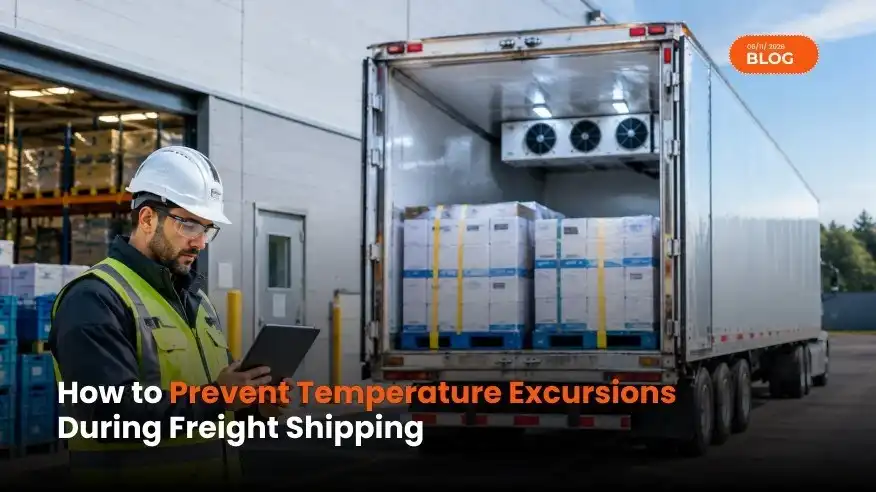
Temperature-sensitive products require careful handling throughout the transportation process. From the moment goods leave a warehouse until they reach their final destination, businesses must maintain suitable conditions to protect product quality and prevent avoidable damage.
One important risk is a temperature excursion in shipping. This happens when a product is exposed to temperatures outside its specified acceptable range during storage, handling, or transportation.
Temperature excursions can affect many types of cargo, including fresh produce, dairy products, meat, seafood, frozen food, pharmaceuticals, and certain chemicals. Depending on the product, even a short period outside the recommended temperature range may require further investigation.
The challenge is that temperature problems do not always happen during the main journey. They can occur while loading cargo, waiting at a warehouse, transferring goods between vehicles, or unloading at the destination.
Preventing these incidents requires more than using a refrigerated truck. Businesses need proper preparation, suitable equipment, clear handling instructions, shipment monitoring, and coordination between everyone involved.
In this guide, we explain what temperature excursions in shipping are, why they happen, and how businesses can reduce the risk of temperature-related problems during freight transportation.
A temperature excursion occurs when a product is exposed to a temperature outside its approved or specified range.
For example, a shipment may require a particular chilled temperature range during transportation. If the cargo is exposed to temperatures above or below that range, the event may be classified as a temperature excursion.
The acceptable range depends on the product and its transportation requirements. There is no single temperature range that applies to all refrigerated shipments.
Temperature excursions can involve:
High-temperature exposure: Cargo becomes warmer than its permitted temperature range.
Low-temperature exposure: Cargo becomes colder than the specified range.
Repeated temperature fluctuations: Conditions move above and below the acceptable range during transportation.
Prolonged exposure: Products remain outside their required temperature conditions for an extended period.
An important distinction is that a recorded temperature excursion does not automatically mean the product is damaged or unusable. Its impact depends on factors such as the product, temperature reached, duration of exposure, and applicable product stability information.
Businesses should investigate temperature deviations using the relevant product instructions and procedures rather than making assumptions about cargo quality.
Temperature deviations can occur at different stages of the supply chain. Understanding the causes is the first step toward preventing them.
One common cause is selecting an unsuitable temperature setting for the cargo.
Different products have different storage and transportation requirements. Fresh vegetables, frozen food, dairy products, seafood, and pharmaceutical products cannot automatically be handled under the same conditions.
Incorrect settings may result from:
Incomplete product information.
Miscommunication between the shipper and carrier.
Incorrect equipment configuration.
Failure to follow product-specific instructions.
Using a standard setting without checking cargo requirements.
How to prevent it: Confirm the required temperature range before booking the shipment. Provide written instructions to the transportation provider and verify the equipment settings before loading.
Refrigerated trailers and containers use specialized equipment to maintain transportation conditions. Mechanical faults, electrical problems, fuel interruptions, or maintenance issues can affect their performance.
If the refrigeration system does not operate as expected, the cargo may be exposed to unsuitable temperatures.
How to prevent it: Arrange appropriate equipment inspections before loading. Ask the transportation provider about its maintenance procedures and how equipment failures are handled during transit.
Temperature excursions can happen even when the main transportation equipment is working properly.
When trailer doors remain open for long periods, outside air can enter the refrigerated space. This may affect internal conditions, particularly during hot weather or when loading and unloading take longer than planned.
Common reasons for delays include:
Warehouse congestion.
Unavailable loading docks.
Unprepared cargo.
Delayed paperwork.
Insufficient handling staff.
Changes to delivery appointments.
How to prevent it: Prepare products and documents before the vehicle arrives. Coordinate loading and unloading appointments and reduce unnecessary door openings.
A refrigerated trailer needs suitable airflow to distribute temperature-controlled air around the cargo.
Incorrect loading can block air circulation and create areas with different temperature conditions.
For example, pallets placed too close together or against designated airflow areas may restrict circulation. This can affect the consistency of the transportation environment.
How to prevent it: Follow the equipment manufacturer's loading guidance. Use appropriate pallet arrangements and avoid blocking air outlets, return-air paths, and other designated circulation areas.
Long-distance freight shipments may experience traffic congestion, severe weather, road closures, accidents, or unexpected stops.
These disruptions can extend transit time and increase the period during which products remain in transportation equipment.
How to prevent it: Plan routes carefully, consider expected travel conditions, and establish communication procedures for delays. For sensitive cargo, discuss contingency arrangements with the transportation provider before pickup.
The most important step in preventing temperature excursions is knowing exactly what conditions your product requires.
Businesses should not rely on general assumptions about refrigerated transportation. The correct requirements should come from the product manufacturer, approved product specifications, handling instructions, or applicable regulatory guidance.
Before arranging freight transportation, identify:
Required transportation temperature range.
Whether the product must remain chilled or frozen.
Permitted temperature variations, if specified.
Humidity and ventilation requirements, where applicable.
Maximum permitted exposure during handling.
Special packaging and storage instructions.
Any applicable monitoring or documentation requirements.
For example, fresh produce may require particular temperature and humidity conditions to maintain freshness. Certain pharmaceutical products may have specific approved storage and transportation ranges.
These requirements can differ significantly, even between products within the same category.
Practical tip: Create a written cargo handling sheet for each product type. Share it with the warehouse team, transportation provider, and receiving facility before the shipment moves.
The equipment used for transportation should match the cargo's requirements.
Refrigerated trailers and containers are designed to maintain controlled conditions during transportation, but equipment selection still matters.
Consider the following before booking:
Confirm that the equipment is suitable for the shipment's size, weight, and cargo arrangement.
Check whether the equipment can maintain the required conditions for the specific product.
Ask about inspections, servicing, and maintenance procedures.
Make sure the equipment and planned loading arrangement can support appropriate air circulation.
Consider whether the proposed equipment and transportation plan are appropriate for the expected journey.
Businesses should also understand that a refrigerated trailer is generally designed to maintain suitable conditions for properly prepared cargo, not necessarily to cool or freeze warm products quickly.
Products should be brought to their required shipping temperature before loading, unless the equipment and transportation process have specifically been designed and validated for another approach.
A pre-loading inspection can help identify problems before cargo begins its journey.
Waiting until a shipment is already moving to discover an equipment issue can make the situation more difficult to manage.
Before loading, confirm that:
The refrigeration unit is operating as expected.
The equipment is clean and suitable for the cargo.
The temperature setting matches the shipment instructions.
Doors, seals, and other relevant components are in suitable condition.
Air circulation areas are clear.
Any required monitoring equipment is working.
The trailer or container has been prepared according to the transportation plan.
A pre-trip inspection may also include reviewing available equipment alarms or diagnostic information.
The specific inspection process should follow the equipment manufacturer's instructions and the transportation provider's operating procedures.
Pre-cooling is an important step in many refrigerated shipping arrangements.
It involves bringing the trailer or container interior to the required temperature before cargo is loaded.
Loading temperature-sensitive products into an unprepared trailer may expose them to unsuitable conditions and place additional demands on the refrigeration system.
However, pre-cooling requirements depend on the equipment, cargo, and transportation arrangement.
Businesses should also remember that pre-cooling the trailer does not replace proper product preparation. A refrigerated unit should not be assumed to cool warm cargo to its required temperature during transit.
Recommended approach:
Confirm the required temperature setting.
Prepare the refrigerated equipment before loading.
Allow the equipment to reach the required condition where applicable.
Verify the temperature before loading begins.
Minimize the time doors remain open.
Confirm that the loading arrangement allows suitable airflow.
Follow the equipment manufacturer's instructions regarding pre-cooling, particularly when operating in different ambient conditions.
Correct loading is essential for maintaining suitable temperature conditions.
Even when a refrigeration unit is operating correctly, poor cargo placement can create uneven airflow inside the trailer.
Businesses should consider:
Leaving required airflow spaces.
Avoiding blocked air outlets.
Following recommended pallet arrangements.
Preventing cargo from interfering with return-air circulation.
Avoiding overloading.
Using packaging suitable for the product.
Separating incompatible products when necessary.
Cargo should be loaded in a way that supports the equipment's designed airflow pattern.
It is also important to consider whether different products can be transported together. Products with incompatible temperature, humidity, ventilation, or handling requirements may need separate transportation arrangements.
Temperature monitoring helps businesses understand the conditions experienced by their cargo during transportation.
Depending on the shipment, monitoring may involve refrigeration unit records, independent temperature data loggers, or other suitable monitoring devices.
These tools can help identify:
Temperature changes during transit.
Unexpected temperature deviations.
Potential equipment problems.
Conditions during loading and unloading.
Whether the shipment remained within its specified range.
For sensitive cargo, monitoring requirements should be established before shipping.
The monitoring plan may include:
Cargo or product temperature, where appropriate.
Air temperature inside the trailer.
Temperature records at defined intervals.
Alarm notifications.
Data logger readings.
Temperature information during transfers.
It is important to understand that air temperature and product temperature are not always the same. A brief change in trailer air temperature does not necessarily mean the product itself has reached the same temperature.
The correct monitoring method depends on the product, equipment, and shipment requirements.
For example, a pharmaceutical shipment may require specific monitoring and documentation under applicable quality procedures.
Monitoring is most useful when someone can respond to an unexpected temperature change.
Businesses should establish procedures for identifying and communicating temperature deviations.
Where suitable monitoring technology is available, alerts can help notify responsible personnel when readings move outside predefined limits.
A response plan should clarify:
Who receives temperature alerts.
Who contacts the carrier or driver.
Who reviews temperature records.
Who decides whether the cargo needs further assessment.
How the incident is documented.
What happens if the shipment cannot continue under the required conditions.
Do not rely on an alert alone to determine whether a product is safe or usable. The event should be assessed using the relevant product requirements and appropriate technical guidance.
Some shipments involve transfers between vehicles, warehouses, distribution centers, or transportation facilities.
These activities can create additional exposure if cargo is not handled correctly.
For example, refrigerated cargo may be removed from one trailer and temporarily placed in an area that does not provide suitable temperature conditions.
Businesses should plan transfers carefully, especially when dealing with sensitive products.
Consider these measures:
Reduce unnecessary handling.
Use suitable temperature-controlled transfer areas.
Coordinate receiving equipment in advance.
Minimize waiting time.
Maintain required documentation.
Confirm handling responsibilities between parties.
For products with strict temperature requirements, ask the logistics provider how temperature conditions are managed during every stage of the transportation process, not just the main journey.
Transportation planning can influence the amount of time cargo spends in transit.
Long routes, unexpected stops, traffic congestion, and poor delivery coordination may increase the risk of transportation disruptions.
A practical route plan should consider:
Pickup and delivery locations.
Expected transit time.
Road and weather conditions.
Delivery appointment availability.
Rest and operational stops.
Equipment servicing requirements.
Alternative routes where practical.
Businesses should also coordinate with receiving facilities to ensure that unloading arrangements are ready when the shipment arrives.
For companies transporting goods across multiple states, route planning and delivery coordination are particularly important.
The objective is not simply to select the shortest route. It is to establish a realistic transportation plan that supports the shipment's timing and handling requirements.
Even with careful planning, temperature deviations can still occur.
Businesses should know what to do when a temperature excursion is detected. A clear response process can help prevent confusion and support a more accurate assessment of the shipment.
A practical response process includes the following steps:
Step 1: Identify the deviation
Record the temperature reading, date, time, and available monitoring information.
Step 2: Determine the duration
Review how long the temperature remained outside the specified range.
Step 3: Inform the relevant parties
Notify the shipper, carrier, responsible quality personnel, or other relevant contacts according to the shipment procedure.
Step 4: Preserve shipment records
Keep temperature logs, equipment records, shipment details, and communication related to the event.
Step 5: Assess the cargo
Use product-specific stability information and applicable procedures to determine whether the cargo needs further evaluation.
Step 6: Document the outcome
Record the investigation, decisions, corrective actions, and any required follow-up.
For pharmaceutical products and other regulated goods, the assessment should follow applicable quality procedures and be handled by appropriately qualified personnel.
A temperature excursion should not automatically result in cargo disposal, but it should never be ignored.
Preventing temperature excursions is a shared responsibility.
Warehouse employees, drivers, carriers, freight brokers, and receiving teams may all be involved in the shipment process. If one party does not understand the handling instructions, the entire transportation arrangement can be affected.
Training should cover:
Product-specific handling requirements.
Correct loading and unloading procedures.
Refrigerated equipment preparation.
Temperature monitoring practices.
Communication during delays.
Procedures for reporting temperature deviations.
Documentation and recordkeeping.
Businesses should also make sure that instructions are easy to understand and available to everyone who needs them.
Empath Logistics supports businesses with logistics and freight transportation solutions. Clear shipment requirements and effective coordination are important considerations when planning transportation for temperature-sensitive cargo.
Before confirming a shipment, businesses can use this checklist to review the main requirements.
Confirm the product's approved temperature range.
Share handling instructions with the transportation provider.
Select suitable refrigerated equipment.
Complete the required equipment inspection.
Prepare the trailer or container before loading.
Confirm the cargo is at the appropriate shipping temperature.
Follow proper loading and airflow procedures.
Install or activate required temperature monitoring equipment.
Confirm the alert and communication process.
Coordinate pickup, transfer, and delivery schedules.
Prepare a response plan for temperature deviations.
Retain relevant shipment and temperature records.
Reviewing these points before pickup can help businesses identify potential problems early and make transportation arrangements more reliable.
Preventing temperature excursions in shipping requires attention at every stage of the freight journey. Incorrect temperature settings, equipment problems, poor airflow, loading delays, route disruptions, and inadequate monitoring can all affect temperature-sensitive cargo.
Businesses can reduce these risks by understanding product requirements, preparing refrigerated equipment, loading cargo correctly, monitoring transportation conditions, and establishing a clear response process.
It is also important to remember that temperature requirements differ between products. The correct transportation conditions should always be based on product-specific instructions and applicable regulations.
With proper preparation and coordination, businesses can manage refrigerated shipping more effectively and reduce avoidable temperature-related disruptions.
Empath Logistics provides logistics solutions for businesses with different freight transportation requirements. When planning temperature-sensitive shipments, clear communication and suitable transportation arrangements are essential for supporting an organized supply chain.
Temperature excursions in shipping occur when a product is exposed to temperatures outside its specified acceptable range during storage, handling, or transportation. The impact depends on the product, the temperature reached, and the duration of exposure.
Common causes include incorrect temperature settings, refrigeration equipment failure, extended loading or unloading, poor airflow, frequent trailer door openings, transportation delays, and improper cargo handling.
Businesses can reduce the risk by confirming product temperature requirements, selecting suitable refrigerated equipment, preparing cargo correctly, maintaining proper airflow, using appropriate temperature monitoring, and coordinating transportation activities.
Temperature monitoring helps businesses review transportation conditions and identify possible deviations. Temperature records can also support investigations when a shipment experiences an unexpected change in conditions.
A temperature fluctuation is a change in temperature. A temperature excursion occurs when the temperature moves outside the specified acceptable range. Not every temperature fluctuation is necessarily an excursion.
No. Refrigerated trucks help maintain suitable transportation conditions, but they cannot eliminate every risk. Equipment issues, loading delays, poor airflow, incorrect settings, and operational disruptions can still cause temperature deviations.
Pre-cooling helps prepare the trailer interior before loading, where required. However, it does not replace proper product preparation, suitable loading, equipment maintenance, or temperature monitoring.
Businesses should record the deviation, review its duration and available temperature data, notify the relevant parties, preserve shipment records, and assess the product using its specific stability and handling requirements. They should follow applicable quality and regulatory procedures before making decisions about the cargo.
Products that may require carefully controlled transportation include fresh produce, dairy products, meat, seafood, frozen foods, vaccines, certain medicines, and other temperature-sensitive materials. Their specific requirements vary.
Depending on the shipment, businesses may use refrigeration unit monitoring systems, independent temperature data loggers, sensors, and alarm systems. The appropriate monitoring method depends on the cargo and its documentation requirements.
Share:


Nov 03, 2026

Apr 24, 2025














‘0’ Comments
Leave A Comments